

Do You Need Durable Product Labels?
Not sure if you need durable labels? Learn when durable labels make sense, what products benefit most, and the conditions they’re designed to withstand.

See why long-lasting labels can make a difference in product packaging
Choosing the right labels for your products might seem simple at first until you realize some labels perform better than others. Depending on what you’re selling and how you package it, using a durable film label instead of a standard paper label can help prevent smudging, tearing, and peeling.
Your label needs to do more than look good. It needs to hold up to the real-world conditions your products face. If moisture, oils, temperature changes, frequent handling, or outdoor conditions affect your packaging, durable labels may be the better choice. In this article, we’ll explain when durable labels make sense, what makes them different, and which products benefit most from them.
Some durable labels resist moisture, oils, sunlight, chemicals, and extreme temperatures. Others are flexible enough for squeezable bottles and uniquely shaped containers. Whether you’re labeling food, beauty products, wellness items, or outdoor products, choosing the right label material can help keep your packaging looking professional.
Not sure if durable labels are right for your products? Keep reading—we’ll help you decide.
Signs your products may need durable labels
Durable labels may be the right choice if your products:
- Are exposed to water, moisture, or condensation
- Come into contact with oils, lotions, or cleaning products
- Are stored in refrigerators, freezers, or other extreme temperatures
- Need to resist scratching, smudging, or frequent handling
- Are packaged in squeezable bottles or flexible containers
- Are used outdoors or exposed to sunlight
If one or more of these apply to your products, durable labels may be worth considering. The materials and construction behind a label play a big role in how it performs and how well it holds up over time.
Different durable label materials are designed to solve different challenges. Some are better suited for moisture and refrigeration, while others are designed to resist oils, chemicals, abrasion, or frequent handling.
Understanding the differences between popular label materials can make it easier to choose the right option for your product and packaging needs.
What makes up a label?
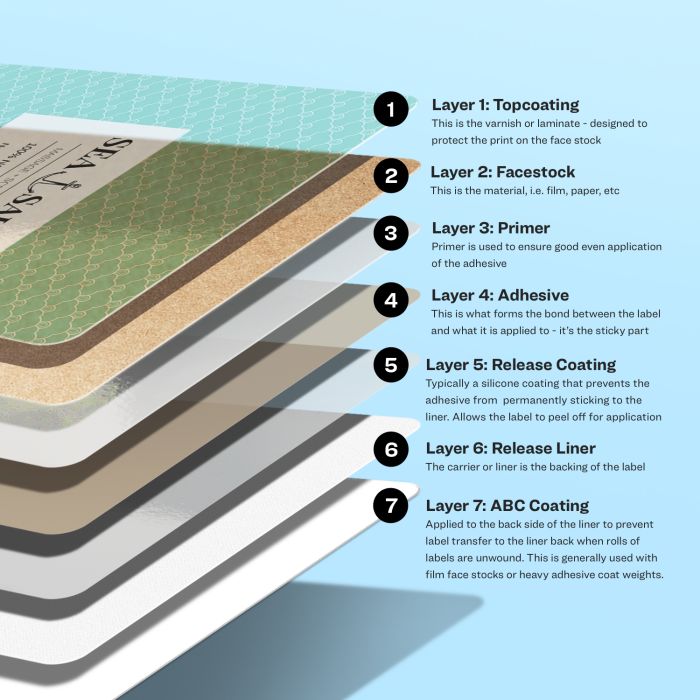
Labels are made up of multiple layers. The main three layers are the face stock, the adhesive, and the liner.
The face stock is the front of your label, the part your customers will see. The adhesive is the glue that sticks to your packaging and can be permanent or removable, and the liner is the paper backing you remove from your label right before application.
Face stock: Standard labels are made with paper face stock. It can be a more substantial, premium paper but paper labels have their limitations. Durable labels have face stock made from plastic films like polyester (PET), polypropylene (BOPP), and other synthetics to resist tearing, moisture, chemicals, and more.
Adhesive: Standard paper label adhesives are typically designed for light indoor use. Durable label adhesives are engineered to maintain adhesion in more demanding environments, even on many removable labels.
Liner: The label liner is the backing paper that supports the label through manufacturing and protects the adhesive until you apply it to your products.
Topcoat: Durable labels feature a surface coating that increases ink adhesion with both standard and digital print technologies.
Durable labels are often tested for performance characteristics such as tensile strength, peel adhesion, abrasion resistance, and chemical resistance to help ensure they perform as expected in real-world applications. Common tests include tensile strength, 90-degree peel adhesion, Taber® abrasion, and chemical resistance. Labels may also undergo real-world adhesion and application testing.
Why these tests are important
These tests help verify that durable labels can withstand the conditions many products encounter during shipping, storage, and everyday use.
Tensile strength: Tensile test machines measure the pounds of force you need to break a label. Durable labels have much higher tensile strength than standard paper labels, making them more resistant to ripping and tearing.
90-degree peel adhesion: Tensile testing machines pull labels at exactly 90 degrees from a variety of surfaces to measure the pounds of force they need for removal.
Taber® abrasion: Taber abrasion machines are the industry standard for testing resistance to scratching, scraping, and rubbing. Avery durable labels are abrasion-resistant to preserve print integrity and keep the labels readable to both humans and barcode scanners.
Chemical resistance: Chemical resistance testing helps evaluate how labels perform when exposed to solvents, cleaning products, and other chemicals that may affect print quality or adhesion. Common tests may include exposure to substances such as heptane, HCL 37%, pH3 buffer, Windex®, Formula 409®, and isopropyl alcohol.
Adhesion testing
In addition to durability, label adhesives are often evaluated for their ability to bond to different packaging materials and perform in a variety of environmental conditions.
Adhesive performance is evaluated under a variety of real-world conditions, including heat, humidity, and other environmental factors that can affect label performance.
Labels may also be tested on difficult surfaces to evaluate how well they adhere to common packaging materials.
- Contoured containers – Small cylindrical bottles, pens, pencils
- Plastics – Storage containers
- Textured plastics -Heavy-duty storage bins
- Irregular surfaces – Plastic bags with items inside, recycled paper to-go bags, take-out containers
Real-life application testing
Real-world application testing helps verify that labels perform as intended in their expected use environments.
Some examples of testing done are:
- Security seals – Evaluate adhesion on surfaces with moisture condensation replicating application to cold drinks.
- Soap and candle labels – Evaluate adhesion on containers with candles lit to ensure the label adhesive sticks and stays on hot surfaces.
- Hand sanitizers – Evaluate label construction to ensure print and graphics stay vibrant and resist a variety of commercial hand sanitizers
- Safety signs – Analyze print durability against a variety of splashes from water and cleaning solutions.
Label application tips
- Clean your container surface so it’s free of contaminants (e.g. oils, liquid, moisture condensation, powder, dust)
- Do not apply labels if the surface temperature is below 30°F at the time of application
- Make sure your product surface is relatively uniform and flat
Recommended uses for durable labels
Avery durable labels will work great as a permanent labeling solution for almost any application. Some popular applications listed below can benefit from durable labels, as well as many others. If you don’t see your product listed below or want some help picking the right label, please call our Customer Care team at (800) 462-8379. They’ll be happy to help you pick the correct label for your project.
Health & beauty products
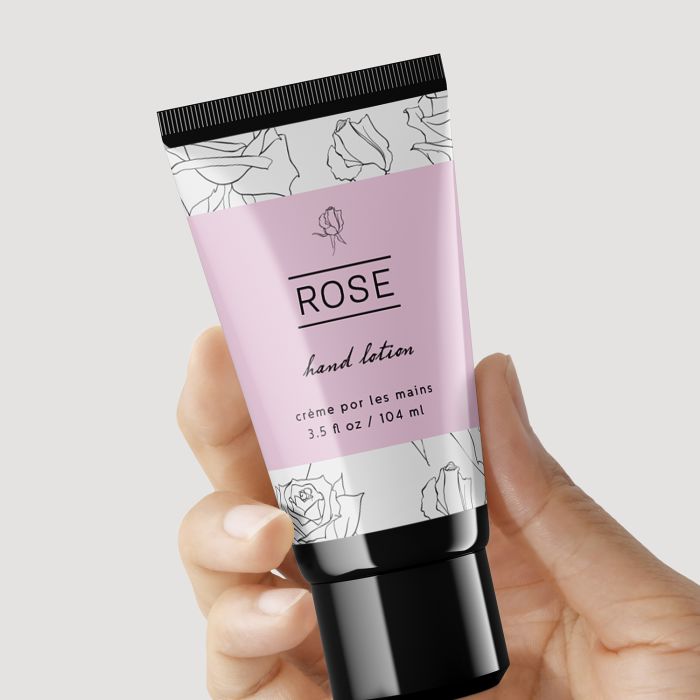
Men’s grooming, essential oils, face serums, shampoos & conditioners, cosmetics, liquid soaps, lip balms, body butters, lotions, creams, deodorants, oral care, hair gels, mousses, candles
Food and drinks
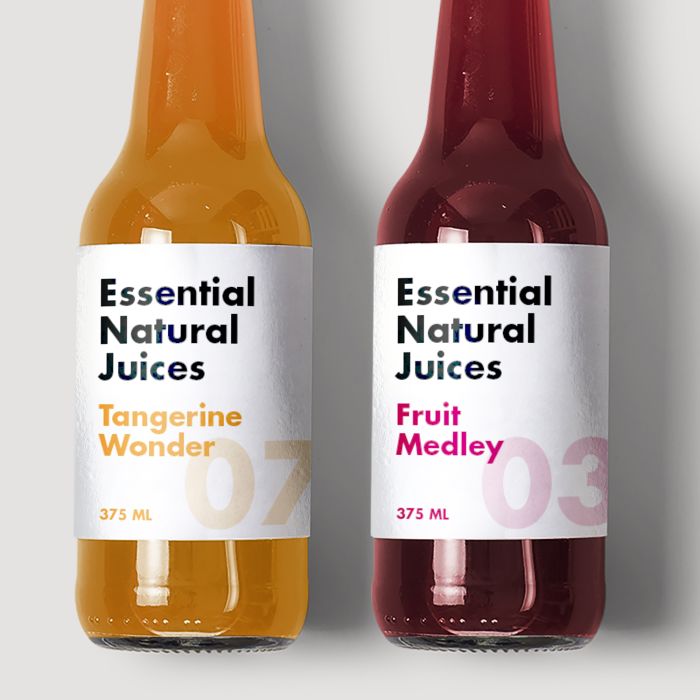
Condiments, sauces, jam, honey, marinade, frozen foods, bakery items, snack food, candy, spices, barcodes, coffee, tea, juice, water, beer, wine, hard liquors, craft brews, refrigerated foods, beverage bottles
Wellness
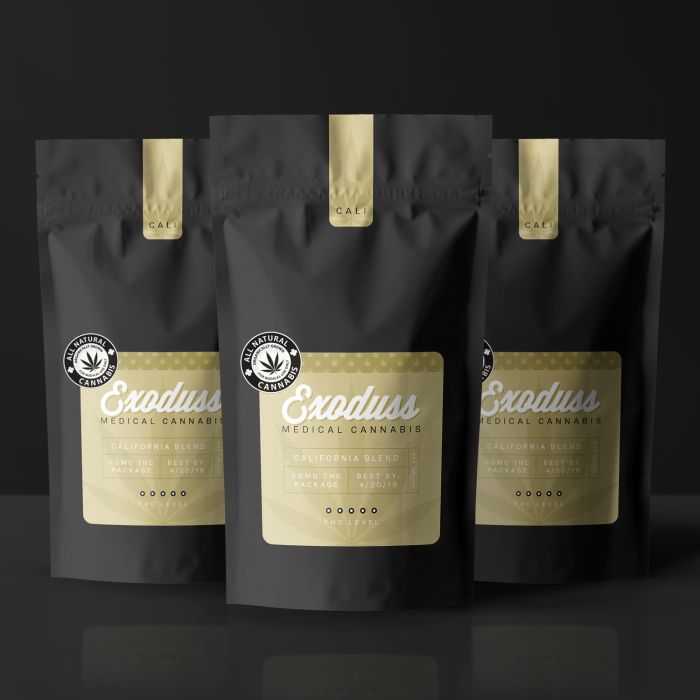
Supplements, vitamins, CBD products, medical marijuana, cartridges, tinctures, edibles, topicals, concentrates
Outdoor applications
Flower pots, fertilizers, gardening products, pet supplies, household cleaners, automotive products, plant markers, garden products
What durable labels are right for you?
Avery offers a variety of durable labels for products and packaging. Whether you want to order thousands of custom printed labels on a roll or just a few label sheets, we have a solution.
Avery custom labels offer the widest variety of materials, finishes, and formats of durable labels. Everything from clear film and squeezable labels to sleek metallics and thermal transfer labels is available to customize and order online.
If you want to print your durable labels yourself, Avery offers two options. You can choose from waterproof film labels or clear film labels in a variety of sizes, shapes, and quantities, or you can also buy several varieties of Avery packaged durable labels in-store or online.
Remember, if you have any questions, please feel free to contact us by phone or chat. We are here to help!

