

Top 5 Home Office Organization Tips to Transform Your Workspace
Learn how to organize your home office for less clutter and better productivity. Plus, discover Avery labels and free tools to simplify home office organization.

How to organize your home office and boost productivity
A well-organized home office isn’t just about keeping things tidy—it can help you stay productive and stress-free. Whether you work remotely full time, split your time between home and the office, or are looking for better work-from-home organization, a clutter-free workspace makes everything easier.
In this article, we’ll explore five simple and effective tips on how to organize your home office:
- Categorize and color-code
- Use the right supplies
- Create functional zones
- Streamline paperwork
- Leave room to grow
From using the right organization supplies to creating systems that grow with you, these tips will transform your office into a hub of productivity. Plus, we’ll show you how to use our free tools to make any office organization project a success.
Why is home office organization important?
One of the biggest benefits of organizing your office is being able to find what you need when you need it. However, there are a lot more reasons to get organized, and most of them can help your life run smoother.
As mentioned earlier, home office organization can lead to increased work productivity and efficiency. Having a neat and organized area to work in can help free your mind and improve your focus. And since you know where everything is, you’ll be able to work faster and more effectively.
Getting organized also makes it easier to clean. Clutter makes it difficult to carry out basic cleaning tasks, so taking the time to arrange things where they need to go will help keep your work area spick-and-span.
A tidy, enjoyable workspace can help boost motivation and make it easier to stay focused and productive. With any luck, this motivation will spread to more than just work.
1) Categorize and color-code supplies and documents
The foundation of a well-organized office is knowing where everything belongs. Start by sorting through your workspace and dividing your items into categories. Group things like paperwork, supplies, and tech equipment in separate categories. Keep or archive anything you need for work and get rid of everything else. Consider donating items that are still in good condition to a school, library, or other charity.
Once you’ve categorized everything, use color-coding to make your system easier to navigate. Assign specific colors to your categories. For example, use blue for financial documents, green for client files, and red for important household paperwork. Color-coded organization labels are a great way to keep your system visually clear and easy to follow.
Avery’s customizable color-coded labels make categorization simple while adding a polished, professional touch to your office.
2) Use the right organization supplies
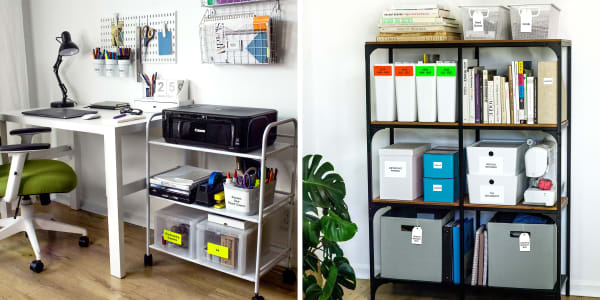
Having the right tools can make all the difference in keeping your office in order. Storage bins, shelving units, and desk organizers are some of the most effective home office storage ideas for maintaining a functional workspace. Maximize vertical space by adding shelves for books, office equipment, or decor. These not only keep things tidy but also add visual appeal to your workspace.
Choosing the right label for each storage solution can make your organization system easier to maintain. By using the right supplies, you’ll streamline your office and ensure everything stays in its place. Here’s a quick look at some Avery labeling options to help you organize your office:
Best materials for labeling home office storage
- Durable removable ID labels are ideal for plastic storage bins because they stick firmly yet remove cleanly
- Glossy clear film feature translucent material that gives a modern, “printed-on” look when used on clear containers and/or desk organizers
- No-iron fabric labels are washer and dryer safe and work well on cube storage, collapsible canvas bins, and other fabrics
- Printable tags attach easily to wire or natural baskets and bins
- Barbell labels are perfect for keeping cords & cables sorted
Pro tip: Don’t get rid of old storage containers because of stubborn labels from last time you organized. We have a few expert tips for removing old labels, and you can use the same block-out labels that businesses use for rebranding to freshen up your office storage.
3) Create functional work zones
The next step in home office organization is to designate different areas for different tasks. For example, complete everyday work tasks at your desk, and dedicate a separate area to seasonal projects or activities that require equipment you don’t use every day.
Get your desk in order with our quick and easy tips on desk organization and make sure everything you need on a daily basis is easily accessible.
As for other areas, here are some workstation ideas you can create in your home office:
Examples of Work Zones:
- Desk zone: Keep essential items like pens, notebooks, and chargers within arm’s reach.
- Paperwork station: Use labeled folders and binders to manage documents like bills, tax files, and contracts.
- Mailing center: Streamline your shipping and mailing by gathering envelopes, packages, packing materials, a paper shredder, address labels, stamps, and everything else you need in one area.
- Printing center: Set up a printing station that includes your printer, cables, printer paper, labels for your printer, ink, etc.
- Hobby station: Dedicate an area in your office that allows you to work on your hobby. Create a crafting area, sewing area, gaming area, or even a cozy little reading area. During the holidays, or if you do a lot of gifting, you might consider making a gift wrap station in your home office.
No matter what areas you create, have fun designating each section of your office with décor elements like partitions, furniture, area rugs, or accent walls. You can even create your own custom wall decals to indicate different areas in the room.
4) Organize paperwork with labels and filing systems
Paperwork is one of those things that can get out of hand really fast. Make sure you stay on top of things with an organized system for sorting, filing, archiving, tossing, etc. You can also get ahead by checking out the best office supplies to help you stay organized.
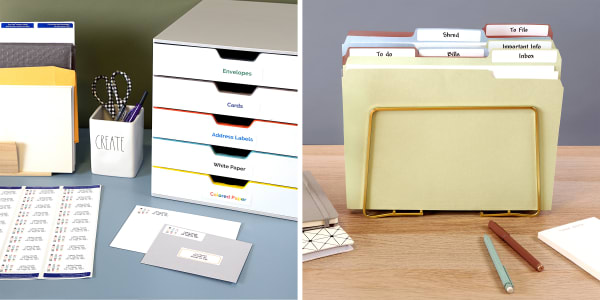
Separate your work documents from home documents to make it easier to organize paperwork at home and find important information when you need it. File tax information and receipts together, while medical documents/records and school documents for your kids get their own folders. Consider creating a grab ‘n’ go emergency binder for important family documents like birth certificates, insurance, etc.
Manage incoming mail or other paperwork by creating a convenient inbox/outbox for your mailing center using removable labels by the sheet. This makes it easier to sort bills, prioritize important documents, shred junk mail, and stay on top of outgoing mail.
Once sorted, use organization labels to identify folders and create a system that works for you. Color-coded folders or binders can help you find what you need quickly. For added convenience, Avery’s removable labels make it easy to prioritize tasks or update files as needed.
5) Leave room to grow
One of the biggest mistakes people make when organizing is filling up every storage space from the start. Anything new you bring into the mix won’t have anywhere to go and can quickly turn into clutter. This just brings you right back where you started.
Set your home office organization up for success by keeping a few empty bins or containers aside for future items. Make sure there’s extra space in various storage areas like filing cabinets, drawers, and bookshelves. You can keep a cohesive look by printing more labels or tags. Reprint your saved projects on Avery Design & Print any time and from any smart device.
By planning for growth, you’ll ensure your workspace remains organized even as your needs change.
Free tools to personalize your organization system
Now that you know why you should get organized, let’s go over how to do it. Avery has all the tools and materials you need to get your home office in order. Here are some of the basics to help get your home office organization started.
Avery offers a variety of office essentials to keep your work organized, including binders, dividers, writing instruments and even planner accessories. You’ll also find a wide selection of labels and tags to help you identify what everything is and where they need to go.
You can create your own custom binder covers, divider tabs, labels, tags, and more using Avery Design & Print Online. Our free design software lets you easily personalize your items with no download required and you can save your projects to access later. When you’re done, you can print it yourself or have us print it for you.
How to Find Avery templates
Easily create custom products using your own text and graphics, or use our large library of professionally designed templates, artwork, and fonts. To find the correct template, just enter your Avery product number into our template finder, use our helpful template support page or call our Customer Care team at (800) 942-8379 for assistance.
FAQs: Home Office Organization
Focus on maximizing vertical space with shelves, use labeled bins for storage, and keep daily essentials within reach to avoid clutter.
Create a filing system with color-coded folders for active, archived, and incoming documents. Use labels to make retrieval quick and easy.
Review your workspace every few months to remove clutter, archive paperwork, and reorganize supplies as needed. A quick monthly reset can help prevent piles of paperwork and keep your organization system working effectively.
Make the most of vertical storage with shelves, wall organizers, and stackable bins. Creating dedicated zones for paperwork, office supplies, and equipment can help keep a small home office organized without taking up extra space.
Storage bins, vertical shelving units, labels, and desk organizers are key tools for maintaining a clutter-free workspace.
Get started on your home office organization today
Transforming your workspace doesn’t have to be overwhelming. With these simple home office organization ideas and the right supplies, you can create a more organized workspace, boost productivity, and reduce everyday clutter. Put these simple organization tips into practice and create a workspace that works for you.
Check out more of our home organization tips here on the Avery blog, or follow us on Pinterest and Instagram for more inspiration ideas.
