

4 Steps to Help You Organize Business Receipts
Organizing business receipts doesn't have to be complicated. Learn four simple steps to create a receipt organization system.

How to organize business receipts for success
Keeping your business receipts organized is one of those tasks that might not be exciting, but it can save you a lot of time and stress throughout the year. If you’re wondering how to organize business receipts more effectively, the key is creating a simple system that makes receipts easy to collect, sort, and find when you need them.
A good receipt organization system helps you keep accurate records, prepare for tax season, track business expenses, and better understand your spending habits. Whether you prefer physical files, digital records, or a combination of both, staying organized makes day-to-day recordkeeping much easier.
In this guide, we’ll walk you through four simple steps to help you organize business receipts, create a system that works for your business, and build a routine you can maintain throughout the year.
- Understand the types of business receipts
- Create a simple receipt organization system
- Collect and store business receipts consistently
- Organize business receipts by category
1) Understand which business receipts to keep
Understanding which business receipts to keep helps you stay organized, prepare for tax season, and maintain accurate financial records. It can also make it easier to track spending and identify business expenses throughout the year.
Common business receipt categories
The IRS recommends keeping records for several common types of business receipts, including:
- Gross receipts, which include cash register tapes, deposit information (cash and credit sales), invoices, and forms such as 1099-MISC.
- Receipts from purchases and raw materials. These should show the amount paid and confirm that they were necessary business purchases. Some examples include canceled checks or other documents that identify the payee, amount, and proof of payment/electronic fund transfers.
- Cash register tape receipts.
- Credit card receipts and statements.
- Invoices for goods purchased or services rendered.
- Petty cash slips for small cash payments.
2) Create a simple receipt organization system
A simple receipt organization system can make it easier to track expenses, prepare for tax season, and find important records when you need them. Before setting up your folders, binders, or storage system, use this quick checklist to get started.
Quick receipt organization setup checklist
- Choose a filing system, such as a file box, cabinet, or binder
- Create receipt categories that fit your business
- Label folders or binder sections clearly
- Collect and sort receipts regularly
- Transfer receipts to long-term storage as needed
- Scan important receipts for digital backup
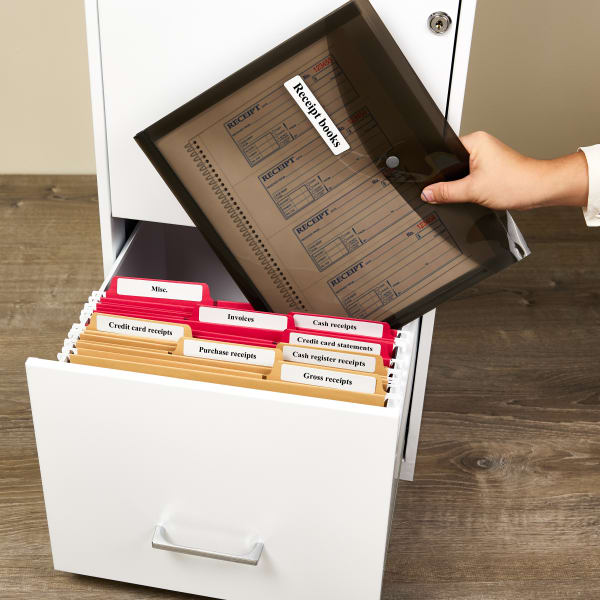
Your filing system can be as simple as a dedicated file box, drawer, or filing cabinet. The important thing is choosing a consistent place to store receipts throughout the year so they’re easy to find when you need them.
When filing, customized file folder labels make everything easy to find and retrieve. Clear labels help you quickly identify categories, tax years, and receipt types so important documents are always easy to locate.
Then, when preparing for the end of the fiscal year, move your receipts to long-term storage.
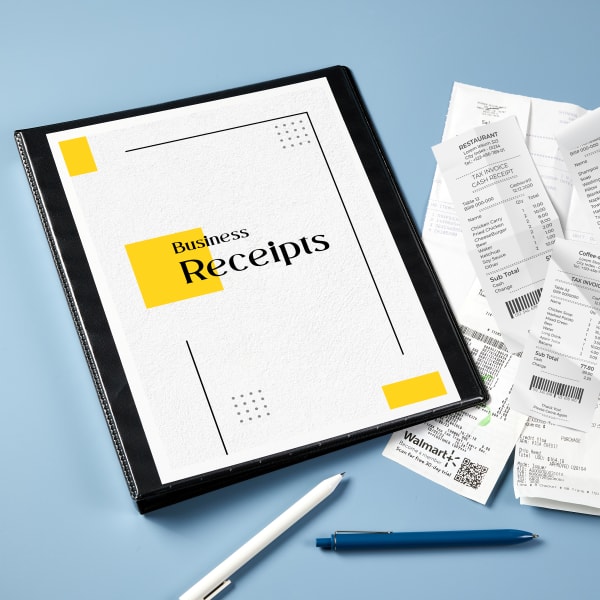
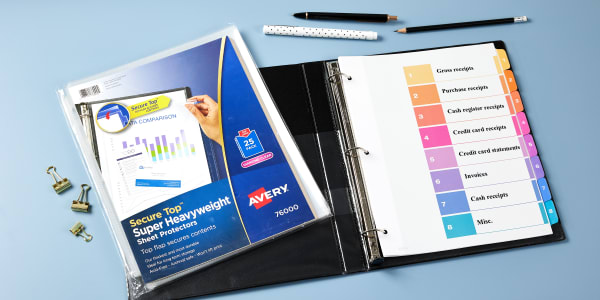
For more daily and monthly needs, consider using a binder to collect receipts before they enter the filing system. Then, equip the binder with sheet protectors for quick storage, dividers to sort receipts as you collect them, and spine inserts along with a cover sheet for easy identification.
Lastly, create a dedicated workspace for managing receipts. Whether it’s a filing area, desktop organizer, or simply a section of your desk, having a designated place for sorting and storing receipts can make the process more consistent and efficient. This definitely makes it easier to stay on top of your receipts. If you’re setting up a dedicated workspace for managing receipts, our tips for organizing your desk can help you maximize space and keep supplies within easy reach.
Physical vs digital receipts
Many small businesses use a combination of physical and digital receipt storage. Physical receipts are convenient for day-to-day organization, while digital copies provide long-term backup and easier record retention. The comparison below can help you decide how to balance the two approaches for your business.
| Physical Receipts | Digital Receipts |
|---|---|
| Tangible record | Convenience and accessibility |
| Easy to access | Search functions |
| Backup in case of technical issues | Environmentally friendly |
| Visual confirmation | Integration with software |
3) Collect and store business receipts consistently
The key to staying organized is creating a routine for collecting, storing, and backing up receipts throughout the year. The most important thing to remember is to stay on top of your receipts. With that in mind, you should plan to loosely sort and collect receipts as you go. As to where to store receipts, a binder is perfect for storing receipts as you collect them. Then, transfer your receipts from your binder to file storage monthly or weekly, as needed. Finally, at the end of the year, scan paper receipts to store them digitally for long-term record management.
4) Organize business receipts by category
Creating meaningful categories makes receipts easier to find, manage, and review throughout the year. While IRS guidelines can provide a starting point, your filing system should reflect the way your business operates.
These are generally the best categories for organizing receipts. However, at the end of the day, it’s more important that you create categories that make sense for your business rather than following a list exactly.
For example, if you run an online-only business, you may not need a category for cash register tape receipts. Or, you may want to categorize receipts more in depth to better track expenses and analyze cost of production.
How to organize receipts in a binder
Make sure you start out with a quality binder that can a) accommodate the number of receipts you collect weekly or monthly and b) won’t fall apart from wear and tear. A durable binder with enough capacity for your receipt volume will make it easier to stay organized throughout the year.
If you’re not sure where to start, our guide to the best home office binders for organizing paperwork can help you choose a binder that fits your needs.
Next, use dividers so that your temporary binder storage matches your long-term filing system. Keeping the same categories in your binder and file folders makes it easier to transfer receipts to storage later. You can organize sections by receipt type, expense category, month, or any system that makes sense for your business.
Finally, use sheet protectors to store receipts within the sections of your binder. This helps prevent receipts from getting damaged, lost, or mixed together before they’re moved to long-term storage.
How to keep personal and business receipts separate
Ideally, the best way to keep personal and business receipts separate is to use separate filing systems. In this scenario, you would have separate binders for the two. Additionally, you could color code the binders and filing system for quick identification. That being said, at minimum you should keep a separate pocket in your receipt binder solely for personal receipts. In fact, even if you have separate filing systems, a “personal receipts” pocket in your business folder is still a great idea for personal expenses incurred at work.
Start organizing your receipts better today
Organizing business receipts doesn’t have to be complicated. By creating a simple system for collecting, storing, and categorizing receipts, you can spend less time searching for paperwork and more time focusing on your business.
Whether you prefer file folders, binders, digital storage, or a combination of methods, the key is choosing a process you can maintain throughout the year. Start with a few clear categories, label everything consistently, and make receipt organization part of your regular routine

