

Scoops on Tap: Crafting Ice Cream with a Creative Twist
Learn how Scoops on Tap built a creative ice cream brand—and get practical tips for choosing durable labels that hold up to real-world conditions.

How a passion for craft turned into a growing ice cream brand
If you’ve ever turned a hobby into something more, you know how quickly things can evolve. One idea leads to another, and before you know it, you’re building something real.
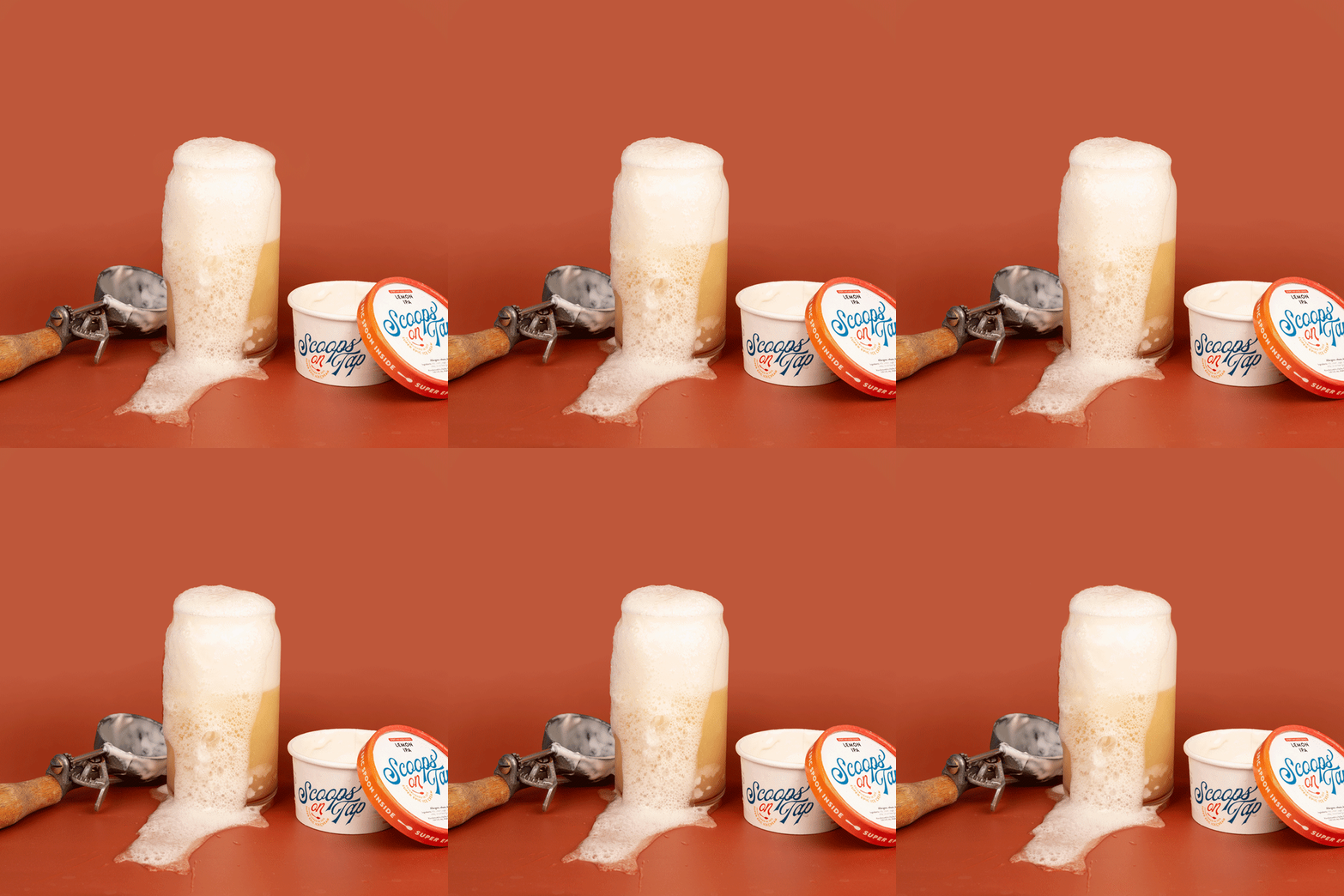
That’s exactly what happened with Scoops on Tap—an ice cream company known for its creative, beer- and spirit-infused flavors and bold branding. What started as a passion project grew into a full business with a production facility, retail presence, and a loyal customer base.
In this customer spotlight, I’m sharing their story along with a few practical takeaways you can apply to your own business—especially if you’re creating physical products and need packaging that can keep up.
The story behind Scoops on Tap
Q: How did Scoops on Tap get started?
A: Sam and Bryan, childhood friends from Southern California, were introduced to handcrafted ice cream early on. Sam’s neighbor used an old-fashioned hand-crank machine, and that experience sparked a lasting interest.
While attending Cal Poly Pomona, they began developing the idea for a business. In 2015, Scoops on Tap officially launched with craft beer–infused ice cream, and over time expanded into wine- and spirit-infused flavors, plus plant-based options.
They later opened a production facility in 2020 and a brick-and-mortar shop in Covina, California in 2022.
Q: What has been your biggest success for Scoops on Tap
A: Our biggest success has been pursuing this entrepreneurial passion and building our business, brand, loyal customer base, and awesome team.
Q: What have been your biggest challenges?
A: Our biggest challenge has been growing this business from nothing. It started with an idea and a passion to do what we do but turning that into a reality is a different story. It has required countless hours, a lot of sacrifices, mistakes, and an endless grind to go from two guys making ice cream to turning it into a profitable business.
Q: What are your plans for the future?
A: When we opened our first brick-and-mortar location in Covina, we could not have been more excited. Beyond that, we are looking to open more stores in the Southern California area, as well as continue to grow our wholesale and retail channels.
How they approach product labeling
Q: Why did you choose Avery for your label needs?
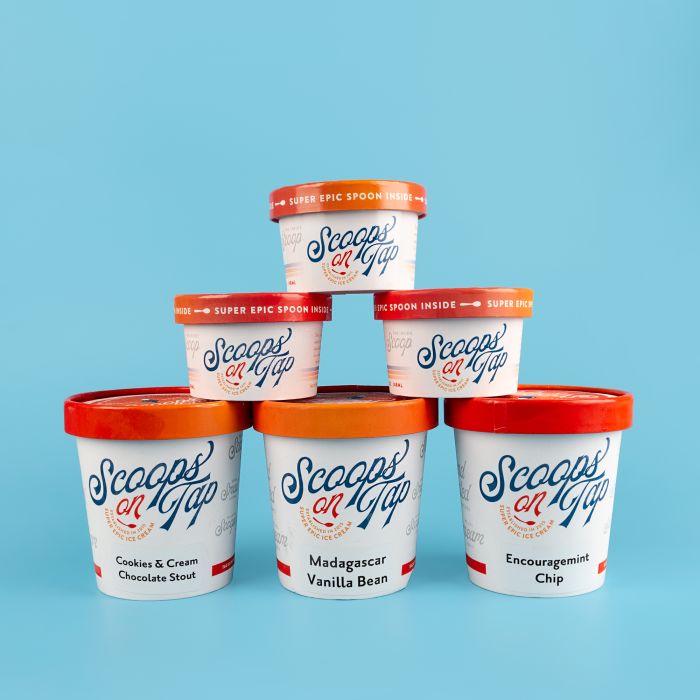
A: We chose Avery labels because they worked. They allow us to easily print our rotating list of flavors onto waterproof labels that work in our laser printer. They are high quality and the various sizes allow us to adapt them to a variety of different sized packages.
The waterproof aspect was a big deal for us as we freeze our ice cream down to temperatures between – 20 and -30 degrees Fahrenheit.
Q: Any special labeling tips to share?
A: There is one very important thing to note if you are packaging items that will get wet. Make sure to adhere your label to the package prior to them getting wet or being frozen. They adhere best to your package when it is dry, so we label our packages prior to running production.
Q: Anything else you’d like to add?
A: We’ve been proud to earn recognition at the LA International Dairy Competition for both our ice cream and packaging design—something that reflects how much detail goes into every part of what we create.
What small businesses can learn from this
If you’re building a product-based business, there are a few clear lessons here that go beyond ice cream.
1. Your product can evolve—your process needs to keep up
Scoops on Tap built their brand around experimentation. New flavors mean constant changes, so they needed a labeling solution that was flexible and easy to update.
If your product lineup changes often—seasonal items, limited drops, custom orders—look for tools that don’t lock you into one design or long production cycles.
2. Packaging has to match real-world conditions
It’s easy to focus on how packaging looks, but performance matters just as much. In this case, labels needed to handle freezing temperatures without peeling or failing.
Think about where your product lives:
- Freezers
- Outdoor markets
- Shipping environments
Your materials should match those conditions.
3. Start simple, then scale what works
They didn’t begin with a massive operation. Like most small businesses, they started with an idea and built from there.
Using tools that work with standard printers and simple workflows makes it easier to test, iterate, and grow without overcommitting upfront.
4. Consistency builds recognition
Even with rotating flavors, their packaging stays cohesive. That consistency helps customers recognize the brand, no matter what’s inside the container.
For your own business, that might look like:
- Keeping logo placement consistent
- Using repeatable label sizes
- Building a recognizable color system
5. Small process decisions make a big difference
Something as simple as when you apply a label can impact how well it performs.
That’s the kind of detail you usually learn through trial and error—but once you know it, it saves time, materials, and frustration.
Find the right label for where you are now
If you’re testing new products or experimenting with packaging, custom printed sheet labels are a great place to start. You can try different materials without committing to large quantities—and get professionally printed results that are ready for real-world conditions.
As your business grows, moving to custom roll labels can help you scale more efficiently with faster application and consistent quality across larger runs.

