

7 Easy Ways to Organize Warehouse Storage
Learn seven practical ways to organize warehouse storage, improve efficiency, reduce picking errors, and create a safer workspace.

How to organize a warehouse for better efficiency
An organized warehouse helps employees find inventory faster, reduce picking errors, improve safety, and keep orders moving. Whether you’re reorganizing an existing warehouse or looking for small ways to improve efficiency, these practical tips can help you make better use of your space and create smoother day-to-day operations.
Whether you’re looking to improve inventory accuracy, make better use of your space, or help employees find products faster, small changes can have a big impact. These seven practical tips cover everything from optimizing your warehouse layout to improving your labeling system so you can create a more efficient workflow.
Why you should organize your warehouse
If employees spend too much time searching for inventory, picking orders, or navigating crowded aisles, the way your warehouse is organized could be slowing down daily operations. Even small inefficiencies can add up over time, affecting productivity, accuracy, and workplace safety.
Well-maintained warehouse storage areas offer a more productive and safer environment for your workers. It saves time from having to look for items or move things out of the way and can help prevent time-eating traffic jams. The time saved means workers can pull materials faster and fulfill orders quicker.
Additionally, uncluttered shelves, aisles, and walkways help reduce the risk of accidents and injuries. A clean, well-ordered warehouse can lessen the chance of trips, slips, and falling objects. Providing an efficient and safe facility is great for improving worker morale, which can lead to an increase in customer satisfaction and eventual growth and expansion.
Best ways to easily organize warehouse storage
1) Clear the clutter with 5S/6S
If employees have to move inventory or work around clutter to complete everyday tasks, it’s time to clear out your warehouse. Schedule cleanups throughout the year, preferably during slower periods, so it’s easier to keep your inventory organized efficiently. However, try to schedule them during your slower times so it’s easier to keep your inventory stored efficiently.
A good starting point when it comes to clearing out the clutter is to go back to the basics of 5S/6S principles and other lean manufacturing concepts. This will allow you to focus on eliminating waste while maximizing efficiency and productivity. Learn more about the 5S/6S methodology and the benefits of each principle to optimize your organizing process.
Regular use of lean strategies can lead to increased productivity, higher product quality, reduced costs, and a safer work environment. It will also help create sustainability for your operations, allowing you to be better equipped for future growth.
2) Review your warehouse layout for hidden opportunities
Once you’ve cleared out excess inventory and supplies, look for ways to make better use of your existing warehouse space before expanding your footprint.
Here are some great warehouse strategies for optimizing storage space:
- Take advantage of vertical space. Use stacking bins with durable ID labels to keep things organized vertically.
- Reduce empty rack space by standardizing bins to fit the rack height.
- Identify underutilized spaces. For example, is there room for hanging shelves above a conveyor belt or adding a storage trailer in your lot for seasonal supplies?
- Create simple, clear paths for foot traffic and forklifts. This will help prevent accidents and minimize the number of steps your workers take for each order.
- Reduce travel time by making the most-picked items more accessible. Store items frequently sold together near one another and high-volume items near the front of the warehouse.
- Post clear, easy-to-read signs to better guide workers and visitors to where they need to go. Find the best adhesive signs you can print right from your desktop.
3) Streamline with warehouse management system software
As your warehouse grows, the right inventory or warehouse management software can help you make better use of both your space and your team’s time.
Take the time to consider implementing or upgrading your warehouse management software (WMS). There’s plenty of time and cash flow to put towards optimizing warehouse efficiency by determining the most effective use of both space and labor using WMS.
For example, as you re-evaluate your warehouse layout, WMS can help you determine material, product, and equipment locations that optimize the flow of your warehouse. WMS can also suggest the best routes and methods for picking or putting away.
You can also use asset management software like Reftab to help keep track of your warehouse equipment. Improving the way you manage your equipment can help you save time, improve workflow, track accountability, and keep things organized.
4) Increase mobility with smartphones & tablets
There are pros and cons to using radio frequency scanners (RF guns) versus smartphones or tablets in heavy-duty environments like warehouses. While many argue RF guns versus smartphones as “either or,” in reality, a combination of the two is likely to be the case in terms of increasing warehouse efficiency.
For example, RF guns are typically better for long-range scanning and are inherently more durable. As you optimize your warehouse layout by increasing the use of vertical space, RF guns are extremely handy. On the other hand, smartphones and tablets often require less training and can work as mobile workstations for warehouse managers and other employees.
WiFi-enabled smartphones and tablets with durable cases provide warehouse managers and employees with a constant connection to inventory or warehouse management systems. No more heading back to the office for printed reports; data is accessible anytime and anywhere.
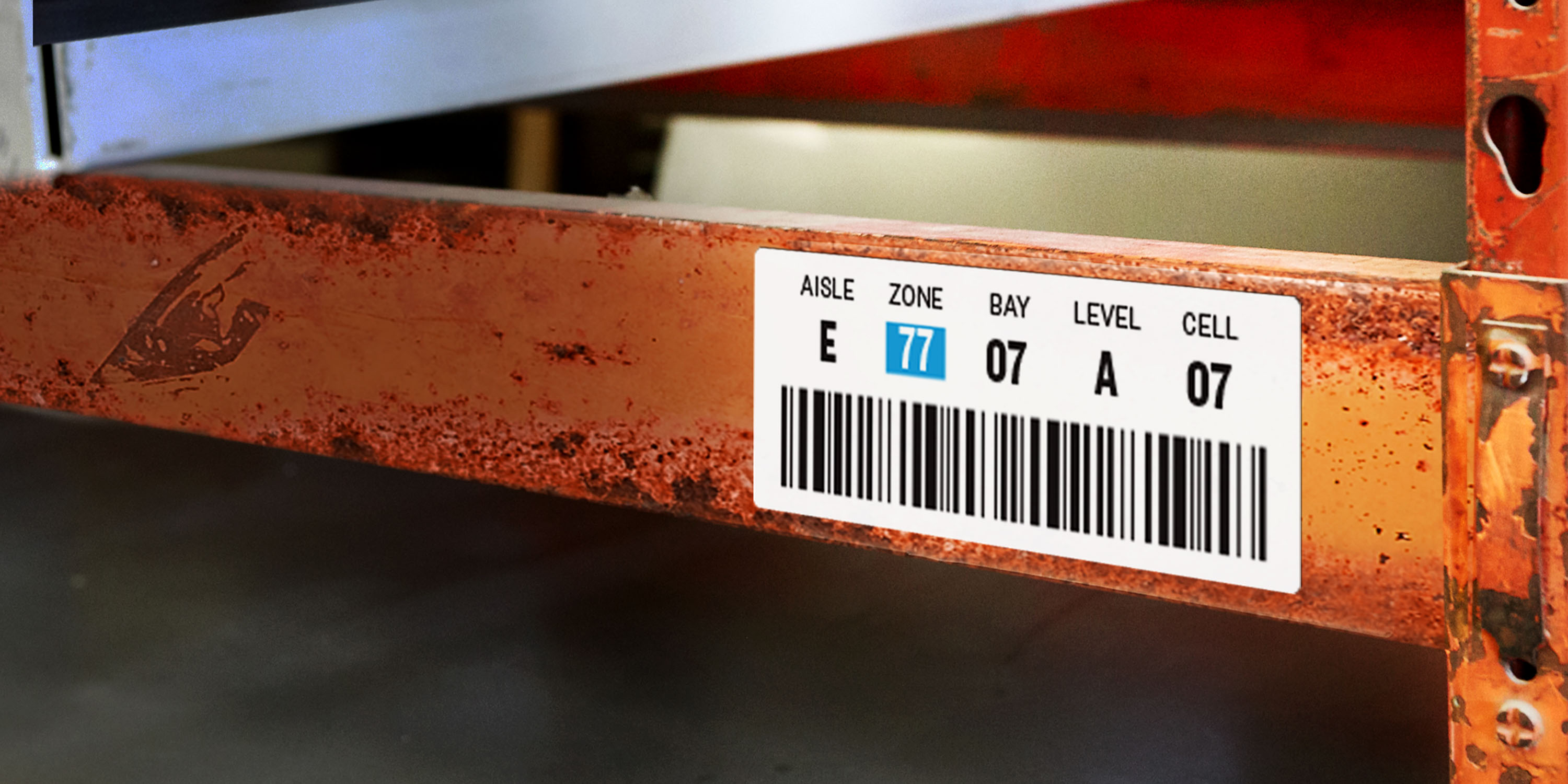
5) Update barcode labels to improve inventory management
Barcode labels allow workers to gather and store data quicker and more accurately than by manually recording it. However, incomplete or incorrect scans from damaged or hard-to-reach barcodes can slow down productivity and disrupt warehouse efficiency and workflow.
Old peeling or taped-over labels should be replaced with durable barcode labels that are engineered for long-lasting performance in heavy-duty environments. Labels for hard-to-reach or vertical storage areas should be replaced with high-visibility labels, like our metallic barcode labels that feature a retro-reflective finish for creating long-range barcodes that can be scanned from a distance.
If you’ve already integrated mobile devices into your warehouse operations, you might consider switching to or adding a QR Code® labels in certain areas. Not only do QR codes hold much more information, but they are also able to integrate seamlessly with camera-operated scanning on devices (versus scanning via reflected light). QR codes can also give employees quick access to inventory details, work instructions, or equipment information using a smartphone or tablet.
6) Review and update your picking process
There are many picking processes to choose from, including single-order, zone, batch, and wave picking; what method works best really depends on the facility and is likely to change over time. Review your picking process and look for ways to make things more efficient.
For example, one way to make it easier for workers to spot items is by using bright, easy-to-see labels. Bright, easy-to-see labels can make frequently picked inventory easier to identify from a distance.
As mentioned, reflective barcode labels can help with inventory management, but they can also help avoid picking errors by improving the label’s visibility in low-light situations. Minimizing errors reduces order mistakes and improves customer satisfaction. Learn more about creating reflective sign labels by watching the video below.
Ensuring all picking equipment is well maintained is also important. Schedule frequent evaluations and checks of equipment, and ask workers to report problems immediately. Regular maintenance and care can help prevent equipment breakdowns, which will take extra time, manpower, and money to fix.
Your pick lists should also be reviewed. Make sure you use well-organized lists in a logical pattern. When workers fulfill orders, they should pick up everything they need as they pass instead of going back and forth between areas.
7) Continually look for ways to improve
The most efficient warehouses treat organization as an ongoing process, not a one-time project. Make organizing a continuous procedure for finding and implementing improvements to your operations. Your business will continually change and grow as time goes on, so don’t stop looking for ways to improve.
Using our organization tips is a great starting point, but keep the future of your business in mind. Ensure your warehouse is adaptable to changes and eventual expansion. Storage solutions for your current inventory may be working perfectly now, but you never know what the future holds.
The Takeaway
The benefits of proper warehouse organization are too good to pass up. Improved efficiency and productivity, a safe and healthy work environment, and improved customer satisfaction are worth the time and energy it takes to keep your warehouse and storage areas clean, uncluttered, and well-organized.
Improving warehouse organization doesn’t have to happen all at once. Start with the areas that create the biggest bottlenecks, then build on those improvements over time. Small changes to your layout, labeling, and workflows can make everyday tasks easier and help your warehouse operate more efficiently.
To learn more about organizing your warehouse using 5S/6S principles, check out our free whitepaper on 5S/6S labeling solutions.
Please note, the contents of this article and related articles on avery.com are for informational purposes only, are general in nature, and are not intended to and should not be relied upon or construed as a legal opinion or legal advice regarding any specific issue or factual circumstance.
QR Code is a registered trademark of DENSO WAVE.

