

Our Best Tips for How to Address Christmas Cards Properly
Not sure how to address Christmas cards? This guide breaks down names, etiquette, and formatting—with tips for families, professionals, and using labels or Mail Merge to make holiday mailing easier.

Why is it important to know how to address a Christmas card?
For some people, Christmas cards are an annual touchpoint with long-distance family and friends…and sometimes the only one. For others, Christmas cards are part of end-of-the year appreciation for customers, clients, and employees. In my case, it’s both! No matter what camp you fall into, making sure your card actually gets where it’s going is pretty important. Knowing how to properly address a Christmas card is the first (and easiest) step to take to make sure your cards reach your intended recipients.
In this post, I’ll cover etiquette and tools like labels and Mail Merge that make addressing your cards a fast and easy process.
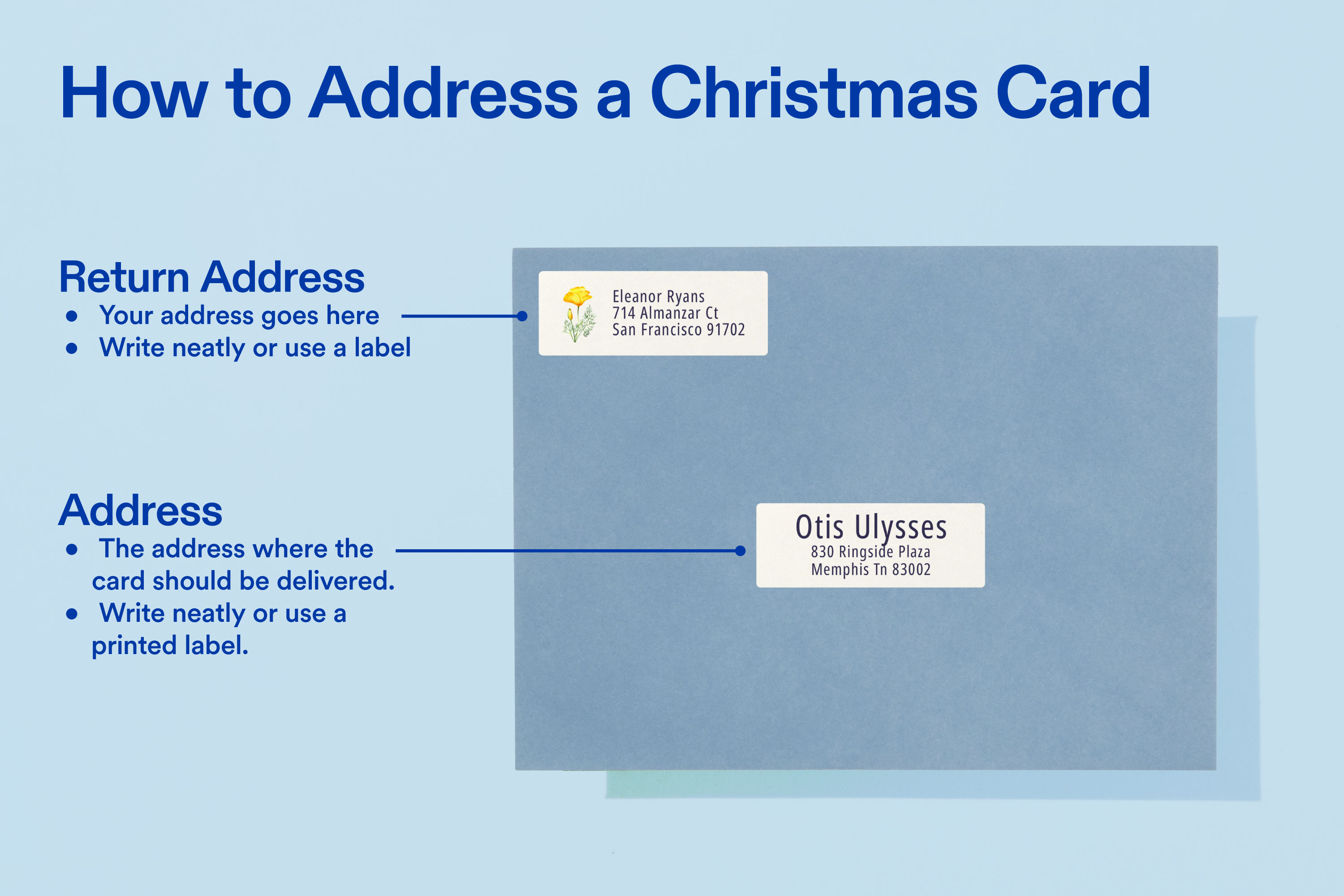
How to address Christmas cards: the basics
The order of information
| Sending to a Home or Business | Addressing a Specific Person at a Business |
|---|---|
| Name of person, family, or business | Business name |
| Street address, apartment or unit | c/o person’s name |
| City, state, ZIP code | Street address, unit or suite |
| City, State, ZIP code |
Whenever I learn something new, I always start with the basics. It’s like the old adage about building a house on a foundation of sand. With that in mind, let’s start with the most simple and important thing to remember about how to address Christmas cards: the order of the information on the envelope. On the first line, start with the full name of the person you want to receive the card. Put their street address along with the apartment or unit number on the second line. Put the city, state abbreviation, and ZIP code on the last line.
If you’re sending a card to someone specific at a place of business, the business name goes on the first line. Underneath that, write “c/o” (short for care of) and the individual’s name. When adding addresses to my Christmas card envelopes, I also match my style to my relationship with the recipient. For friends and family, I won’t hesitate to use nicknames or even inside jokes in the first line. But I always use the person’s full name for professional contacts like clients, coworkers, or customers.
Common addressing mistakes to avoid
- State abbreviations
- ZIP code typos
You have to remember that more than a billion Christmas cards are sent each year in the United States. For example, roughly 1.3 billion are actually mailed, based on Hallmark data and USPS reporting. With such high volumes of mail, even small mistake like the wrong state abbreviation or a typo in your ZIP code can make your Christmas card undeliverable.
Since abbreviations can be tricky in general, I like to use this guide to state abbreviations to check my Christmas card addresses. A ZIP code with even one digit off can also be marked undeliverable or returned to sender, so it’s always a good idea to check your addresses with the official USPS ZIP code tool.


Addressing special situations
Even if you already know the basics of how to write out an address, there are still instances that trip up a lot of folks (me included). Here’s a quick FAQ breakdown to help you choose the correct way to address cards in any situation.
If everyone shares the same last name, you’re good to go: just write “The Garcia Family” or “The Garcias.” The important thing to remember about pluralizing last names is that you never need an apostrophe. ✅The Yangs is correct, ❌ The Yang’s is not.
When a couple doesn’t share a last name, I always write both full names, such as “Alex Martinez and Jamie Chen.” If they have kids, you can include “& Family” or add their names on a separate line. Order doesn’t have to follow outdated etiquette rules—use whatever feels respectful. Personally, if I know one person better than the other, I lead with their name.
When I’m sending a card to someone I know has a professional title—like Dr., Prof., Capt., or Sgt.—I always use the title. If two people share the address but have different titles, I list the person with the higher rank or credential first.
Whenever I’m in doubt, I lean on clarity and respect: full names, no nicknames, and a clean, easy-to-read address. And I always include my return address, especially when sending Christmas cards—undeliverable mail has a way of disappearing during the busy season.
Sending a Christmas card to someone in the military
Addressing cards to someone actively serving in the military is a little more complicated than sending mail to a business or home. First of all, there are two routing systems that help mail reach service members stationed around the world: Army Post Office (APO) and Fleet Post Office (FPO). When you address a Christmas card to someone in the military, you’ll need to know their full name, rank, unit or box number, and the correct APO/FPO designation followed by the ZIP code.
This official USPS tool can help you check APO and FPO ZIP codes. USPS also has a full resource page for sending military and diplomatic mail.
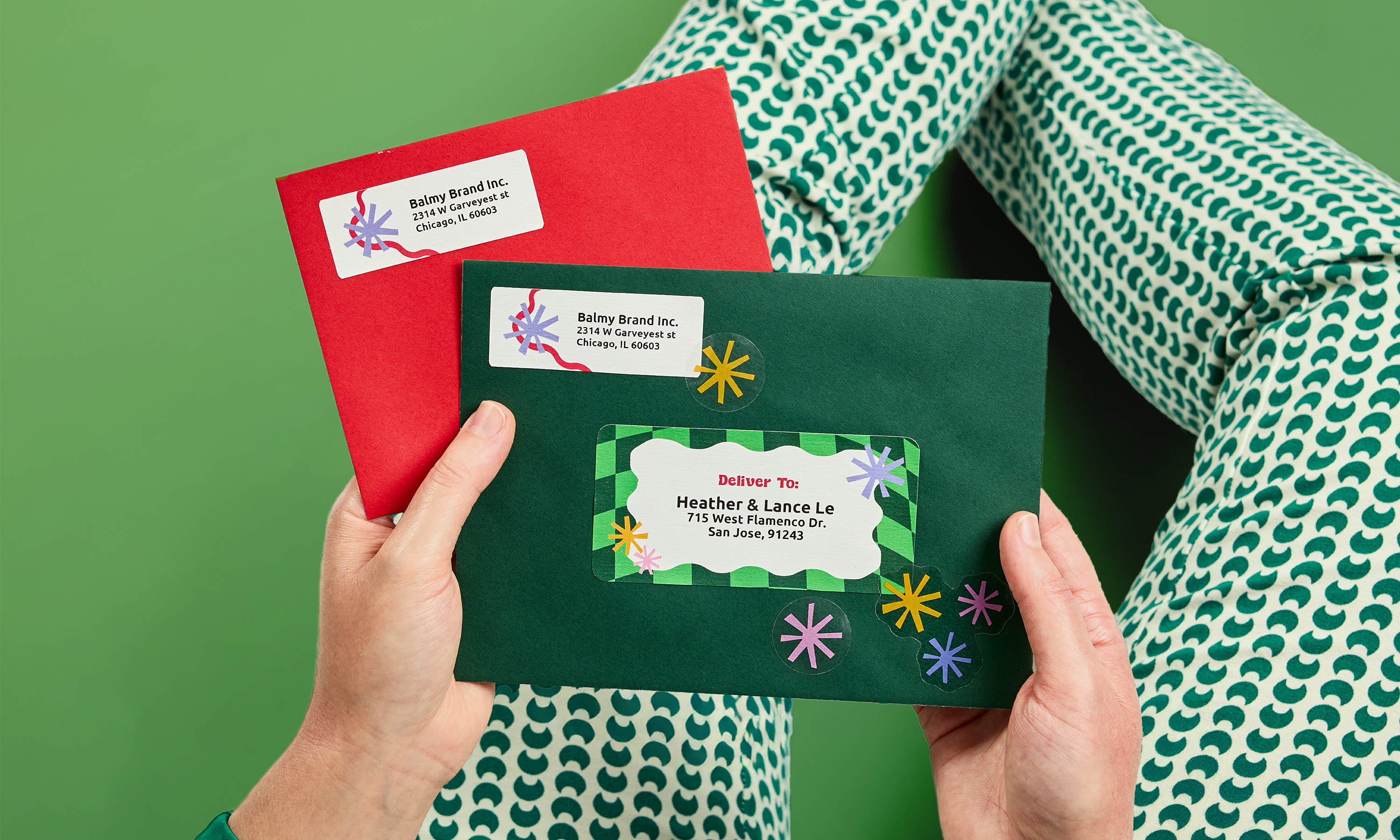
Making it easier with Christmas card labels
I’ll be honest, as soon as Halloween is over, I feel like time operates differently—I blink and suddenly it’s mid-November. Which means I’m always rushing to get my holiday cards out the door. If you’re like me, I can’t recommend using Christmas card address labels and return address labels enough. They always make the process easier and save me time.. Plus, they look polished and my envelopes get a professional, personalized touch. Personally, I go all out with seasonal colors and graphics, but simple labels are also great. With the right design tools, you can decide exactly how much personality you want your mail to have.
If you’re designing your own labels, I love using our label maker powered by Avery Design and Print Online (ADPO). It gives you the freedom to customize fonts, colors, and layouts, or you can choose from dozens of free Christmas address label templates to get started quickly. Having these tools handy makes the whole process feel less stressful and a lot more fun.
Organizing your Christmas card list
There’s something cozy and nostalgic about keeping a written address list. I even have a section for addresses in my bullet journal. But if you really want to simplify sending cards, I’ll share my secret: I organize my Christmas card mailing list in a spreadsheet like Excel or Google Sheets. Collecting addresses for Christmas cards digitally was truly my “level-up” moment in terms of efficiency. What I love about it is that you can sort, update, and reuse your Christmas card address list year after year. No more having to track down missing information or rewrite entries. It also helps you catch name changes, new addresses, or families that have grown since last year.
The best part is that once you have everything in a spreadsheet, you can use the Mail Merge tool in Avery Design and Print Online to import your list directly. What Mail Merge does is automatically fill in names and addresses for your labels. For bulk holiday cards, this feature feels like a lifesaver because it frees up hours you’d normally spend handwriting each envelope or even typing out individual labels. It’s one of those small steps that make the whole mailing process feel smoother and a lot more manageable.
Mail Merge tutorials and resources
Explore these articles and videos to get expert insights for using the Mail Merge tool in ADPO.
- Take the Mystery Out of Mail Merge | Avery.com
- Watch a Mail Merge tutorial on YouTube
- How to format your mailing list in Excel (or other sheets)
Quick answers to Christmas card etiquette FAQs
Put the recipient’s full name on the first line, their street address on the second, and the city, state, and ZIP code on the third. For families, use “The Garcia Family” or the plural form of their last name.
Most people send Christmas cards between late November and mid-December. If you’re mailing out of state or internationally, aim for earlier to make sure everything arrives on time. Our blog post with updated Christmas shipping deadlines is a good guide for making sure your cards go out before the cutoff.
Use the person’s full name and title, and keep the messaging professional. If sending to someone at their workplace, address the envelope using the business name and “c/o” plus the individual’s name.
Use clear, easy-to-read formatting: full name on the first line, street address on the second, and city, state, and ZIP code on the third. Avoid nicknames unless the card is casual or going to close friends.
FAQs about addressing and tools
Yes. Adding a return address helps undeliverable cards come back to you instead of getting lost during the busy holiday season. Some people also see it as a little impolite to leave it off—kind of like getting a call from a number you don’t recognize.
Either is fine, but printing or using address labels saves time and keeps your envelopes clean and easy to read. Handwriting works well for smaller lists or if you prefer a personal touch.
Send a quick text or message asking for it—you’ll be surprised how fast people reply during the holidays. You can also check last year’s list or confirm through a mutual friend.
Absolutely. Printed address labels are neat, fast, and easy for mail carriers to read. You can choose simple designs or festive Christmas address labels to match your style.
Create a simple spreadsheet with columns for names, street addresses, cities, states, and ZIP codes. Then upload it into Avery Design and Print Online to automatically fill in your labels using Mail Merge.
Smart ways to boost your card-sending game
Figuring out how to address Christmas cards so they get where you want them to go is step one. Now you’re ready to start streamlining the process to maximize efficiency—and joy. As someone who sends a lot of holiday mail, these are the smart habits that I’ve learned make Christmas card season feel so much easier.
- Print return address labels 1–2 years’ worth at a time.
- Keep your mailing list updated in a spreadsheet.
- Double-check ZIP codes with a USPS lookup tool.
- Organize your addresses early to avoid stress.
- Pair your workflow with Avery Mail Merge for faster sending.
If you’re ready to get a head start, one of the simplest ways to streamline everything is by choosing a design you love and using our Shop by Design portal. You can browse festive options, customize them for free, and print at home or order them ready to go. With the right tools, addressing Christmas cards becomes less of a chore and more of a tradition you can actually look forward to.

