

How to Organize Your Desk: 7 Easy Ideas to Stay Focused
Find the focus in your workflow. Try 7 simple desk organization ideas—from paperwork systems to label storage—to help you start today.

Organizing your desk helps you focus and feel at ease
I’m the classic career-with-a-side-hustle archetype—writing full-time for Avery while also running a small hobby business. From experience, I know that keeping my desk organized is essential for focus and mental clarity.
Like many small business owners, I’m never truly off the clock. And I work from home, so I get how easy it is to let business clutter spill into your space. Over time, that chaos can wear you down. And everyone needs a break. Even small changes can help you create a workspace that supports your focus, helps you do your best work, and makes it easier to step away when the day is done.
Ready to clear the clutter? Start here to organize your desk
- Sort and store active paperwork with a system
- Use portable storage for a flexible workspace
- Regularly archive old paperwork and files
- Use pegboard to organize vertical desk space
- Try creative, desk-friendly sticker and label organization
- Keep packing and shipping supplies within reach
- Start with the right mindset: small steps count
How I started organizing paperwork at home
When I finally decided to tackle the mountain of paperwork piling up in my home office, I didn’t start with fancy systems or expensive storage. I started small—by creating binder labels. It felt manageable, and it gave me an immediate sense of progress. This quick video shows how easy it is to make custom binder spines using Avery Design and Print Online.
1) Sort and store active paperwork with a system
Organizing paperwork isn’t about building a perfect filing system—it’s about keeping active papers from taking over your desk. Once I got my paperwork into binders, it became much easier to see what I was actually dealing with and what needed a more permanent home.
Here’s the most fail-proof way I’ve found to tackle that: set up simple storage for incoming, outgoing, and high-priority paperwork. And keep them within arm’s reach. If you have a lot of active documents like receipts, it’s also nice to have a space for those. For me, organizing business receipts is the big one. I rely on them when it’s time to write off expenses during tax season.
Supplies I like for organizing paper on my desk
When it comes home office organization tools, don’t knock the classics. I found my favorite paper-taming solutions were right in front of me the whole time. I’ve seen countless letter trays and desktop file organizers at office stores. Normally, I kind of passed them by, but they’re actually awesome for making the most of vertical space. You can also go rogue with creative storage like small collapsible crates for file folders. This is where file folder labels make a big difference. When everything is clearly labeled, it’s easier to put papers away quickly—and keep paper clutter from creeping back in.
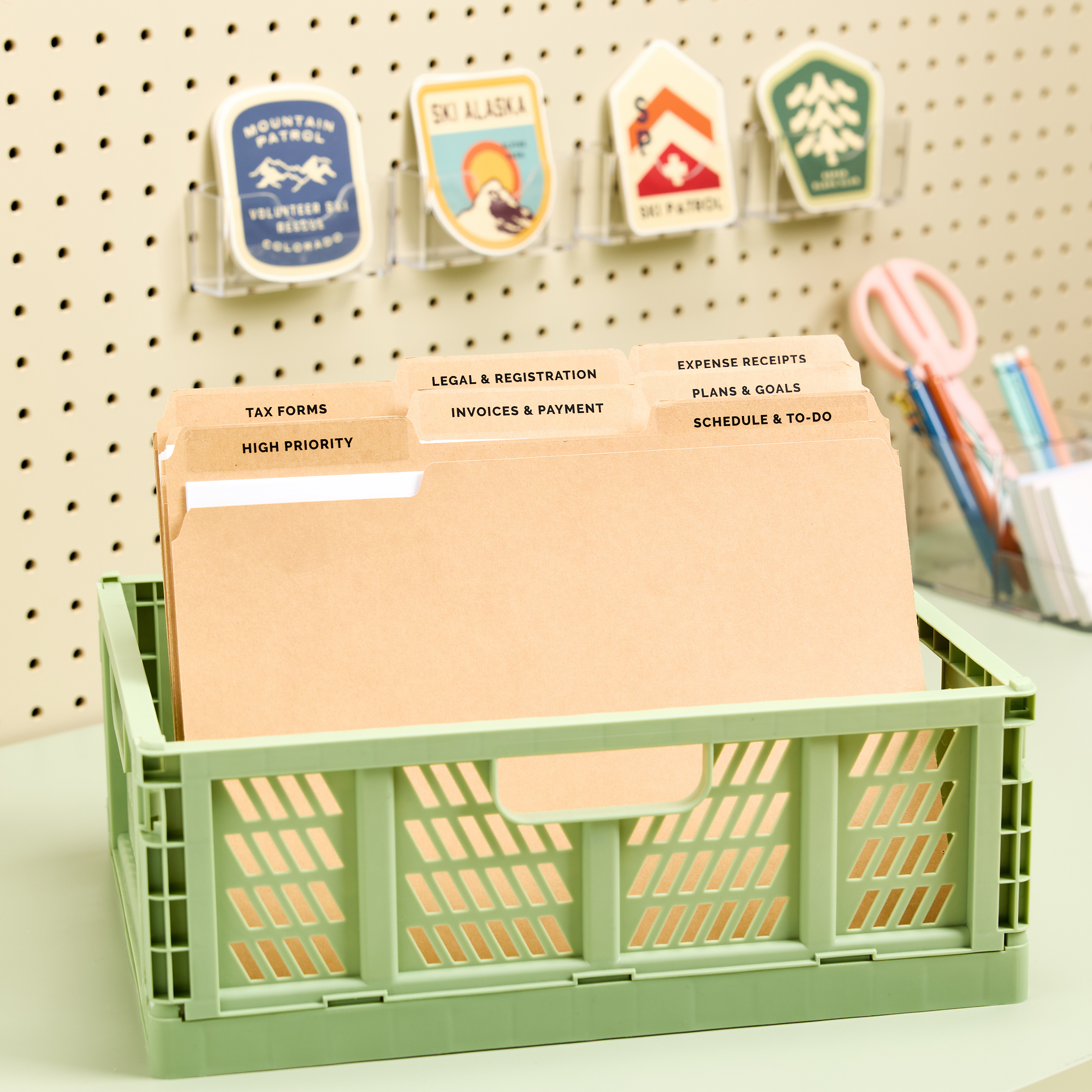
Glossy clear file folder labels are my go-to for organizing paperwork on my desk. The material gives a “printed on” look that matches my office aesthetic.
On Avery.com, you can order printable glossy clear file folder labels or get them custom printed. I like the option to order blank printable labels by the sheet. It gives me a wider range of materials than are available in retail packs.
Of course, you have to live with the labels you use to organize your desk. If you’re like me, you want them to look good. I use Avery Design and Print Online (ADPO) to customize all my labels online because I can even use it on my phone. Once they’re customized the way I want, I prefer to the professional printing service by Avery. But you can easily print them at home too!
2) Use portable storage for a flexible workspace
Many small business owners don’t work in just one place, which makes desk organization trickier than it sounds. Wearing all the hats for my small business means my workday can happen anywhere. I’m often juggling crafting at home, shopping for supplies, and selling in person at markets or pop-up events. Does that sound familiar?
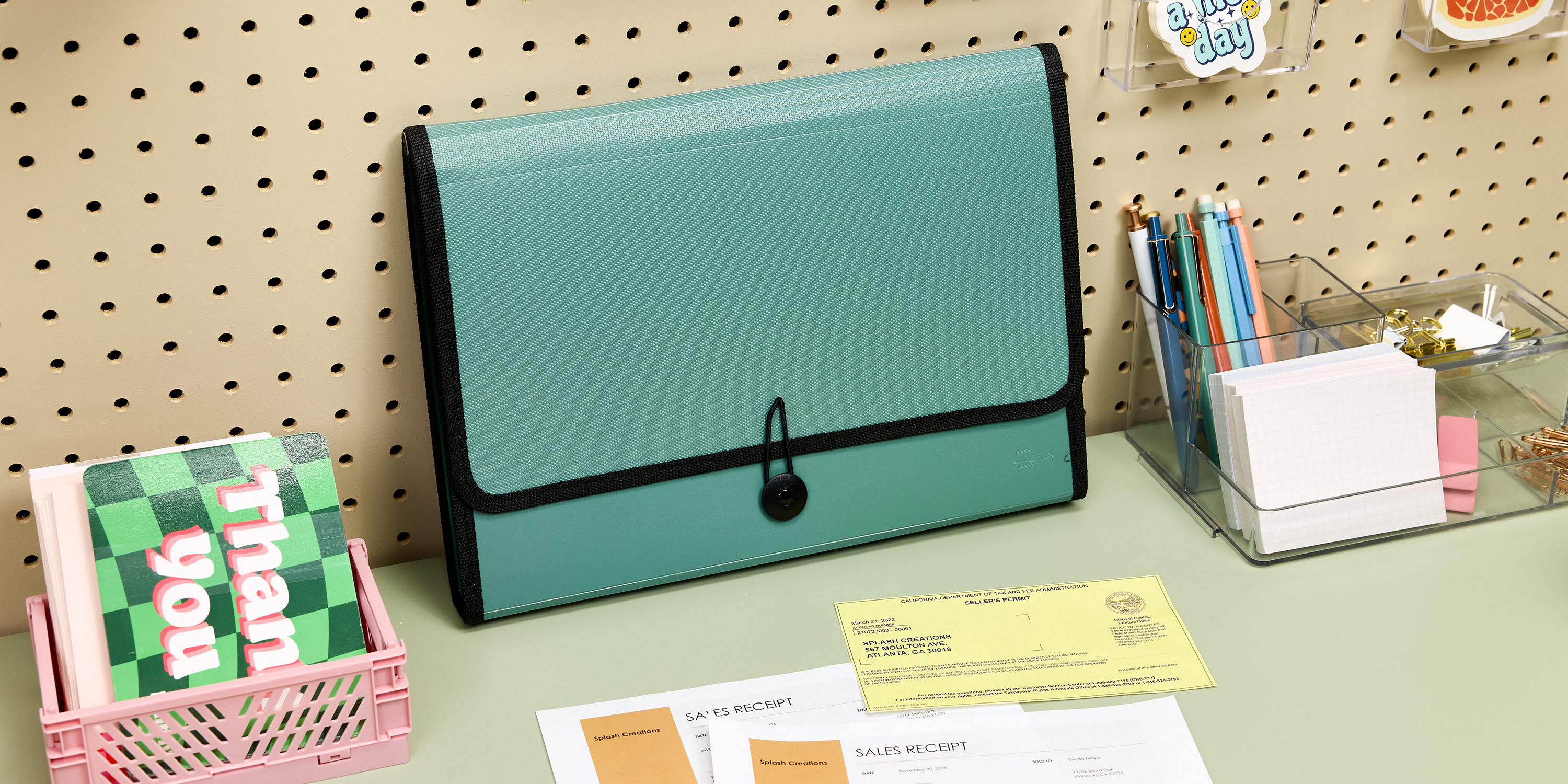
The reality was that I kept ending up with messy stacks of papers when I was constantly moving work between my desk and a travel bag. To finally organize my desk—especially when I need documents and supplies to move with me—I’ve found that portable storage makes a big difference. Options like a portable file box or accordion file organizer help keep papers contained and easy to grab. I personally use Avery accordion file organizers (like this one in sage green) and find them incredibly helpful for keeping everything together.
Here are a few examples of paperwork that move around with me:
- Order forms: For tracking customer purchases, especially when taking commissions in person or at markets.
- Receipts: To keep a record of cash sales and expenses.
- Material lists: For quick reference when shopping for wholesale supplies.
- Price lists and promotional flyers: For sharing with potential customers at pop-up shops or events.
- Laminated booth signs: For displaying prices, sales, special offers, accepted payment methods, and QR codes to Venmo, PayPal, Instagram, and more.
3) Regularly archive old paperwork and files
Some paperwork needs to stay close at hand, while other documents need to be saved for the long term. For me, that’s mostly tax documents and receipts. If I kept everything from the entire year on my desk, it would quickly turn into nothing but paper piles. Since the IRS recommends keeping tax return records for at least three years, those files need a place to live that isn’t my everyday workspace.
Organize to get long-term files off your desk
That’s where archiving files comes in. Archiving isn’t about hiding paperwork away—it’s about storing important documents so they’re easy to find later without taking over your desk. If you’re figuring out how to organize papers long-term, the goal is simple: separate what you need now from what you’ll need later.
I’ve found it works best to move archived paperwork into a dedicated filing cabinet or drawer. Clearly labeled folders and indexed hanging files make it easy to see where everything belongs and put papers away quickly when you’re done. To make things even easier, I rely on color-coding with my favorite self-adhesive index tabs and color-coded file folder labels to keep archived files organized at a glance.
4) Use pegboard to organize vertical desk space
I consider pegboards as one of the most versatile desk organization ideas for maximizing vertical space. Vertical space is often overlooked when it comes to organizing a desk. In the past I’ve certainly been guilty of letting things either pile up or sweeping the mess into drawers—never to be seen again. One way to help you clear the clutter is to set up a pegboard above your desk.
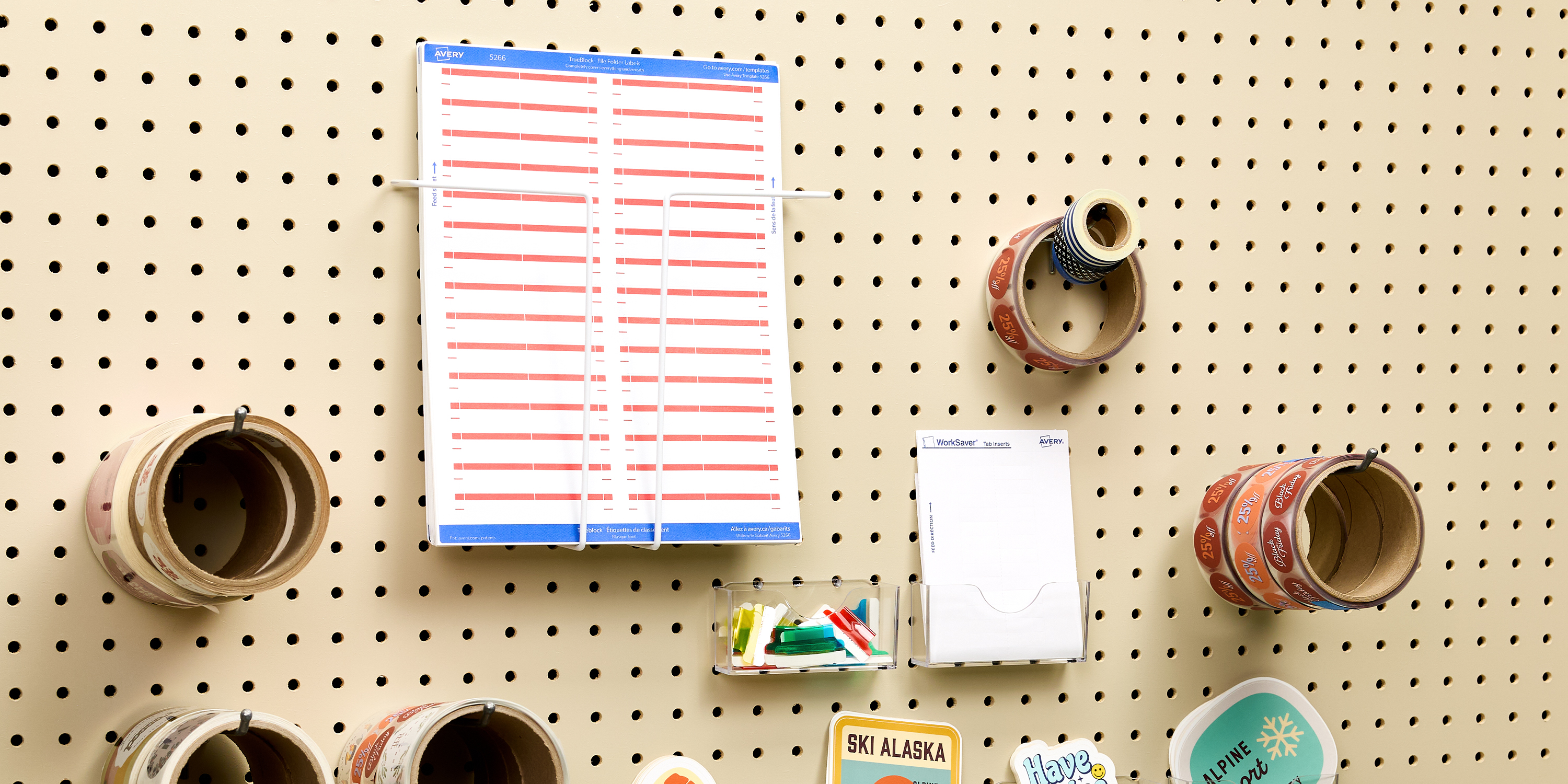
Because my side-hustle business is all about crafting, I use pegboard for storing essentials that need to be easily accessible yet out of the way. Think of tools like scissors, rulers, and craft knives that can be hung for quick access. Small baskets or bins clipped to the pegboard can hold items like spools of thread, measuring tapes, or even small paint bottles. I personally love hooks that can hold rolls of ribbon, tape, and especially roll labels and stickers. Pegboard organization not only keeps these essentials organized—it also transforms your workspace setup into an inspiring, efficient space tailored to whatever you obsess about.
5) Try creative, desk-friendly sticker and label organization
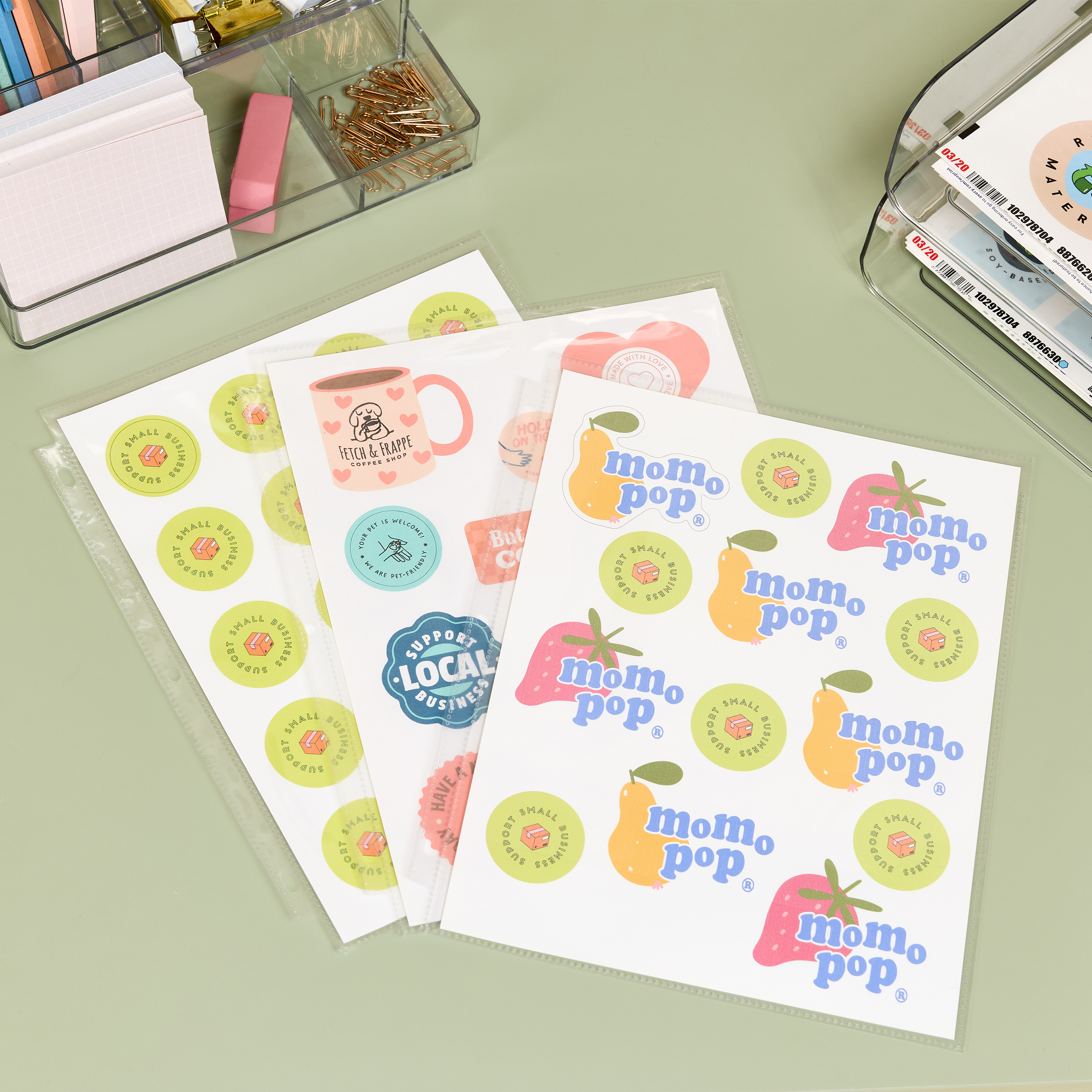
I’m not a sticker business, but I use stickers and labels constantly for packaging and promotions. Keeping my stickers and labels organized makes your workspace feel more professional—and saves time when I need to grab the right label quickly. Since it’s literally, just me, I’m always looking for sticker storage ideas that make my workflow more efficient. But I also want them to be affordable and not take up much space on my desk.
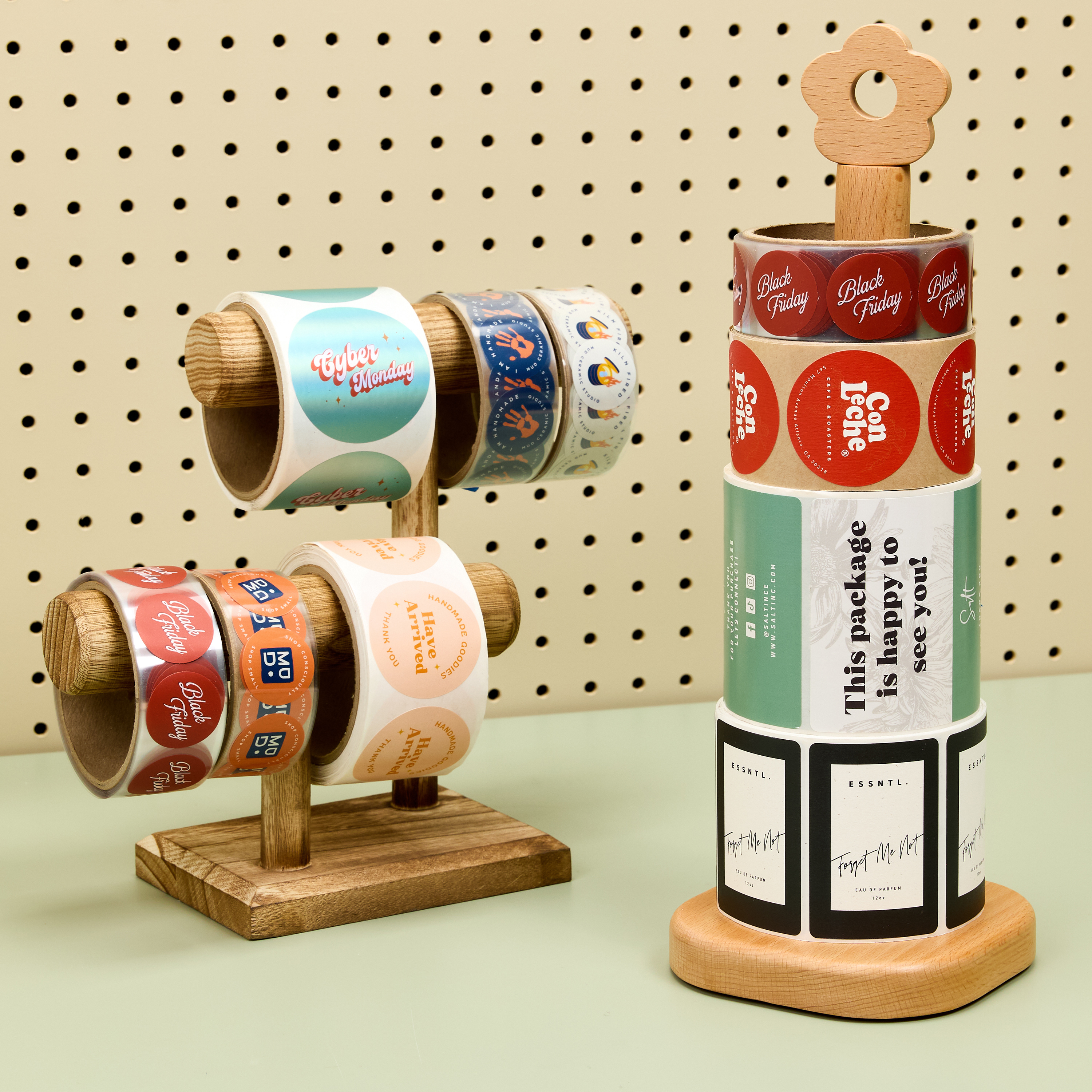
Sometimes all those asks feel like I’m asking for the world, but it becomes more doable when I think creatively about desk supplies organization. File racks, shoe cubbies, and even paper towel holders can double as surprisingly effective label storage. For roll labels, it’s all about pegboards for me because I use quite a few different rolls of stickers and labels. I love how easy it is to see everything and pull from the rolls as needed. But one of my favorite DIY label ideas is using a paper towel holder as a roll label dispenser. It’s a simple solution that works perfectly in tight spaces when you only use two or three rolls at a time.
For sheet labels and stickers, keeping everything stored flat is key. You don’t want any type of storage that allows the sheets to bend or flop over. File racks, tiered document trays, or mail cubbies help keep sheets organized and ready to use without bending or getting buried under other supplies. These are the intentional storage choices I make to keep my labels and stickers visible, accessible, and easy to work into my everyday workflow.
6) Keep packing and shipping supplies within reach
To be super real with you, packing and shipping can only go one of two ways for me. It’s either a chaotic, stressful mess, or a smooth, repetitive process that feels almost meditative. What makes the difference is keeping my supplies organized and within reach. Mailers, envelopes, tissue paper, labels, stickers, scissors, freebies—everything can get scattered very quickly if you’re not intentional about where it all lives. Especially during busy times of the year, like when I’m fulfilling holiday orders, there’s no reason to make things harder than they already are.
Create a calm, repeatable packing setup
That’s why I’m a big believer in creating a designated area for packing and shipping supplies as part of my desk setup. When everything has a place, I can keep my desk tidy, which I love. But nothing is more relaxing than everything being in the right place for packing. That’s when I can just get in my groove, packing orders faster packing orders faster and with less effort. Clear storage paired with the right labels helps keep supplies visible, easy to grab, and ready to go when it’s time to ship.
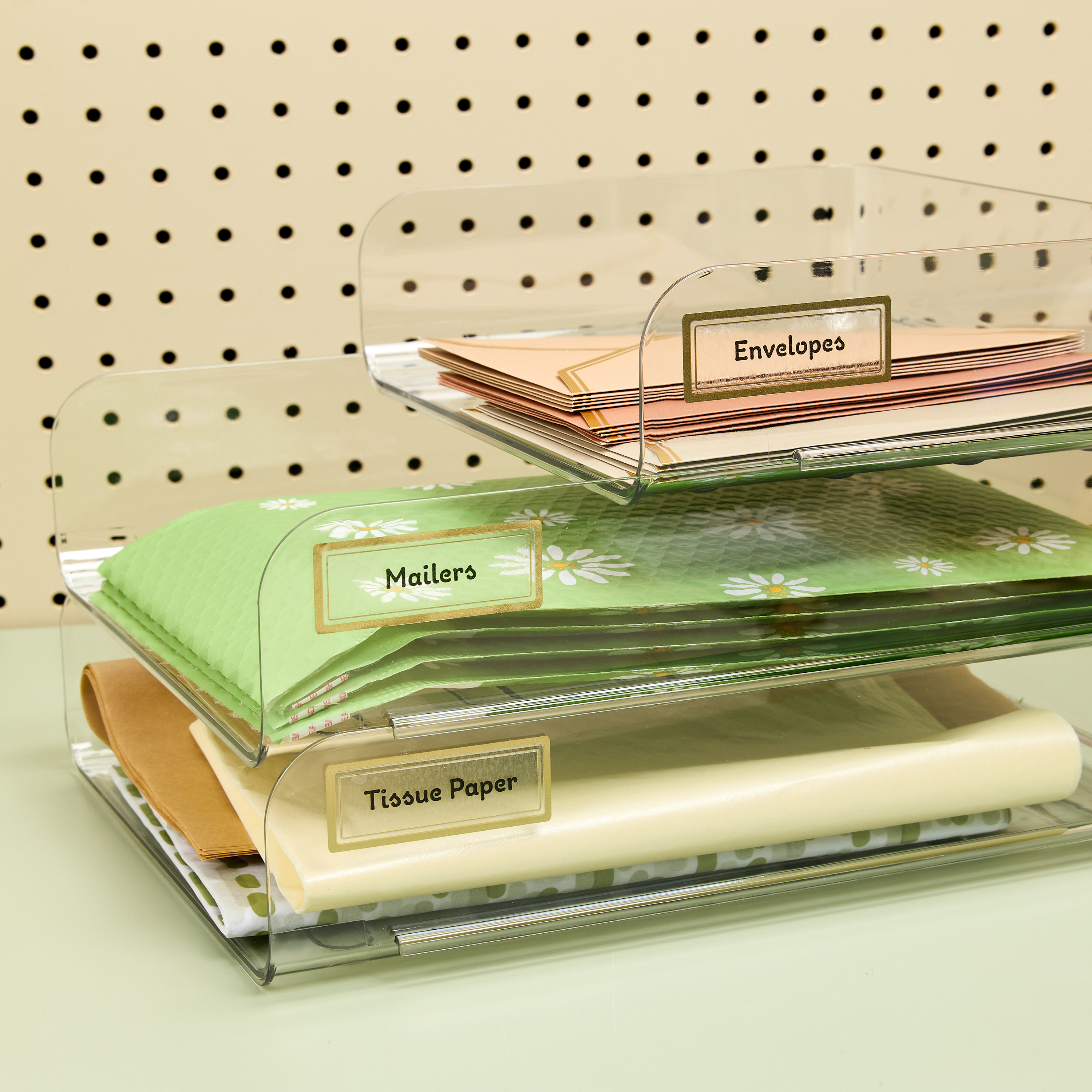
I am obsessed with Avery 6550 address labels for labeling clear, acrylic desktop storage. The gold border is so unique and they’re the same size as the iconic Avery 5160 address label (1″ x 2-5/8″).
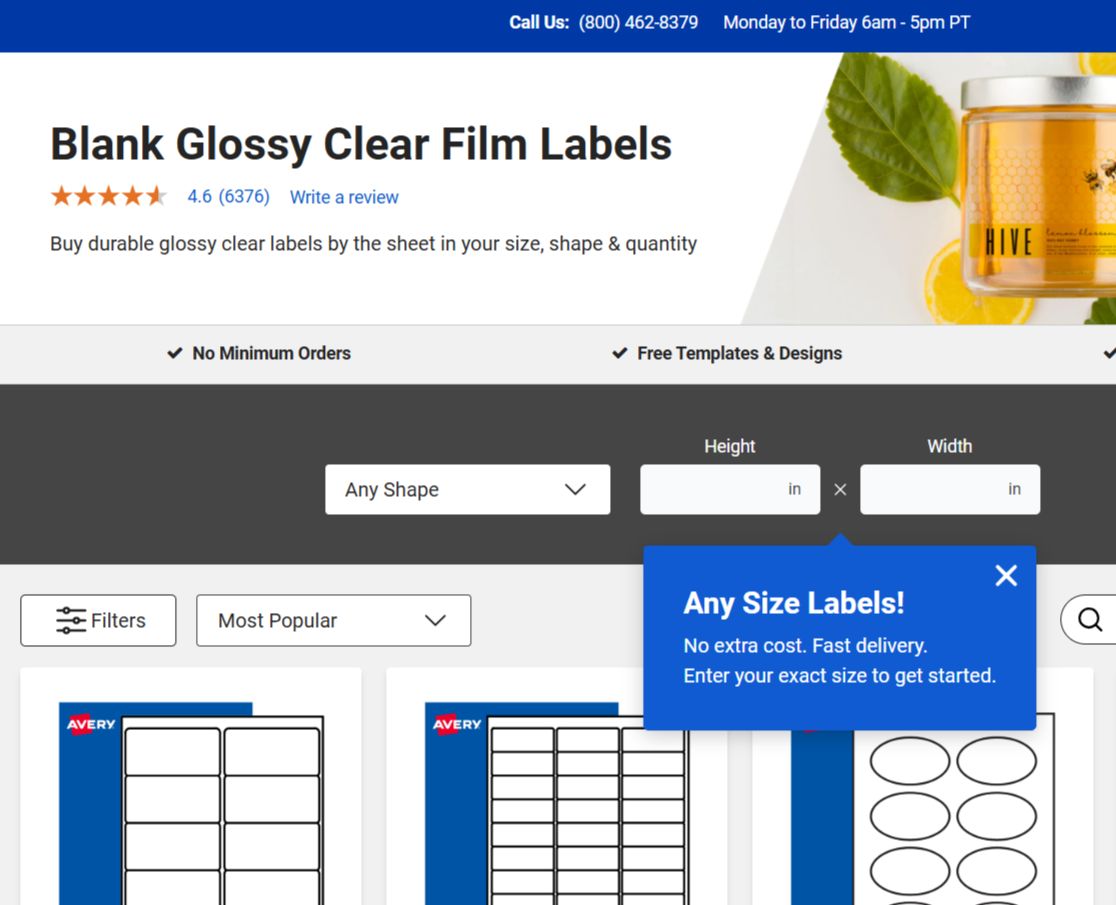
Got weird drawers? Glossy clear labels sold by the sheet let you choose the exact size that fits your drawers or trays. You can print them yourself or order them custom printed for a seamless, professional look.
7) Start with the right mindset: small steps count
It’s easy to tell yourself things like, “It doesn’t matter how my desk looks—I’ll deal with it later,” or “I can’t organize my desk until I can afford to redo my whole office.” I’ve said all of those things myself. But from experience, I can tell you this: don’t wait. You don’t need a perfect plan or a big budget to get started—you just need to start.
Making even small changes to your workspace can help you feel more focused, less stressed, and better equipped to do your best work. There’s no reason to stay stuck waiting for some self-imposed milestone when you can make your desk work better for you right now.
Start by taking a quick look at what’s actually on your desk. How often do you really use that dusty laminating machine? Move items you don’t use regularly into drawer storage or remove them entirely. Then take a moment to assess your décor—does it still bring you joy, or have you simply outgrown it? Letting go of what no longer serves you creates space for the things you truly need.
You might be surprised by how much better your desk looks—and feels—once you take those first steps toward learning how to organize your desk in a way that supports your work and your well-being.
Have desk organization questions? These FAQs can help
The best way to organize paperwork on your desk is to separate active papers from long-term files. Keep current documents—like invoices, orders, or forms you use weekly—in letter trays or desktop file organizers within arm’s reach. Here’s how to choose the best binder for paperwork in your home office. Archive older paperwork in labeled folders or a filing cabinet so it doesn’t take over your workspace.
If you work from home, desk organization starts with flexibility. Use portable storage for paperwork and supplies that move between rooms or work locations, and prioritize vertical space with shelves or pegboards. A setup that adapts to your day makes it easier to stay organized—and focused—over time.
Small desk organization ideas include using vertical space, clear containers, and labeled storage to reduce clutter without adding bulk. Pegboards, stacking trays, and drawer organizers help keep frequently used items visible and easy to grab while freeing up valuable desk space.
For everyday label storage on your desk, focus on keeping labels flat, visible, and easy to access. Sheet labels store best in file trays or document organizers so they don’t bend, while roll labels are easier to manage on dispensers, pegboards, or shallow drawers. If you’re storing labels long-term or in bulk, factors like temperature, humidity, and packaging matter more—this guide on sticker and label shelf life covers those details in depth.
You’re ready—organize, reset, and refocus your workspace
You don’t need a perfect plan or a full afternoon to begin your desk organization reset. I’ll just say it (because someone has to): Organizing your desk doesn’t have to happen all at once. Small changes—like giving paperwork a home, keeping supplies within reach, or labeling storage clearly—add up faster than you think. When your desk works for you, focus follows. If you’re ready to take that first step, browsing label designs is an easy, low-pressure way to get started.
And you don’t have to start from scratch. Browsing label designs—even ones made for products—is an easy way to get ideas you can adapt for folders, drawers, bins, and more.
