

How to Choose the Right Label Size for Your Product
Not sure what label size you need? Learn how to measure your container and choose the best label size for your product.

Choosing the right label size is an important part of product packaging. The size of your label affects everything from how your design looks to how easily customers can read important information. Whether you’re labeling jars, bottles, candles, or other products, the label should complement the container while still leaving enough room for branding and product details.
Before I start designing a label, I like to think through a few key decisions. In my experience, the right label size usually comes down to three things: what the label needs to say, the shape of the container, and how much flat space is available for the design.
Quick steps to choosing the right label size
- Decide what your label needs to say
- Check the shape of your container
- Measure the available label space
Once you work through these three steps, it becomes much easier to choose a label size that looks intentional instead of squeezed onto the container.
1) Start with your label’s purpose
Consider the font size and style you plan to use, as well as the amount of text your label needs. A balance between text size and label size is crucial so consumers can quickly find the information they need without straining their eyes.
The main function of product labels is to communicate information clearly and effectively. When I’m choosing a label size, the first thing I think about is what the label actually needs to do.
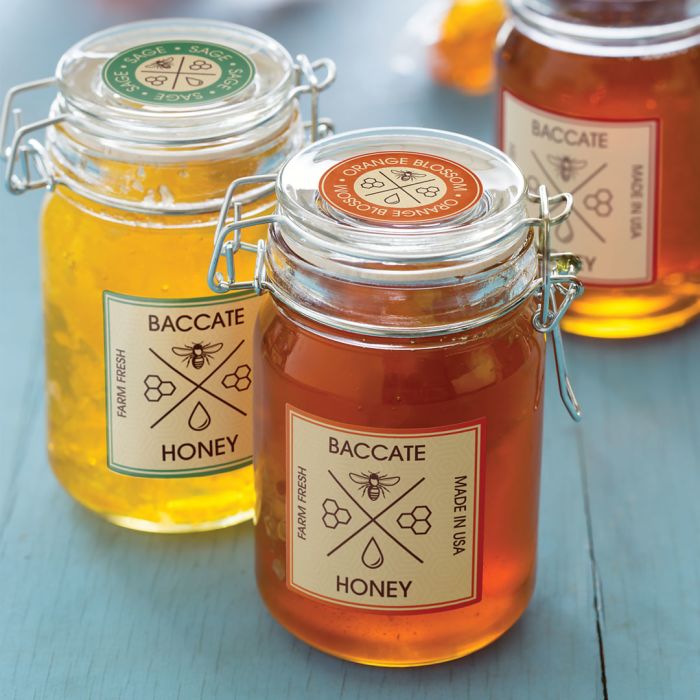
Are you creating a bold logo label with very little text? Or do you need room for ingredients, instructions, or regulatory information? Those decisions will affect how much space your design requires.
A label that’s too small might not leave enough room for essential information. On the other hand, a label that’s too large can overwhelm the container and make the product look crowded. I also think about the font size and style I want to use. A good balance between text size and label size helps customers quickly find the information they need without straining their eyes.
How label size affects your design
Label size plays a big role in how your design comes together.
If you’re still figuring out what style or layout might work best, it can help to start by looking at real label designs applied to products. Browsing examples can make it easier to see how different label sizes and shapes work across jars, bottles, candles, and other packaging. One easy way to explore ideas is through the Avery “find-a-design” template portal for labels. There you can browse by product label type and preview editable designs to see how they look in different shapes and sizes.
Larger labels give you more room for graphics, logos, and product details. They’re great when you want the design to make a strong visual impact on a shelf or in a product photo. Smaller labels, on the other hand, can create a minimalist or more refined look. In some cases, a smaller label simply works better because the container has limited space or strong curves.
When I’m designing labels, I try to think about the overall balance between the container, the label, and the design itself. The best label sizes usually feel like they belong on the container rather than competing with it.
2) Consider your container shape
The dimensions and shape of your container play the starring roles when choosing the right label size.
Whether you’re working with standard Mason jars, sleek cylindrical bottles, or uniquely shaped containers, the label should complement the product’s size and shape. Curves, edges, and textured surfaces can all affect how well a label fits and how it looks once applied.
For example, a label that fits nicely on a flat container may not work as well on a curved surface. I’ve found that labels that extend too far into curved areas tend to wrinkle or lift over time.
That’s why it’s always a good idea to evaluate the available label space on your container before committing to a specific label size.
3) Measure your container
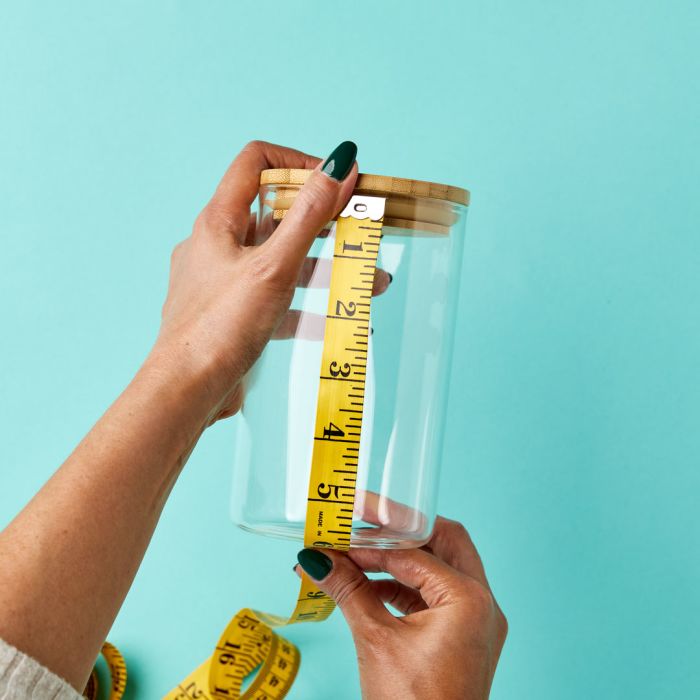
Once I’ve decided what the label needs to say and evaluated the container shape, the next step is measuring the available label space.
Start by identifying the flattest surface where the label will sit. On jars and bottles, this is usually the straight section between the shoulder and the base. I like to use a flexible tape measure so I can measure both the height and the width of that area.
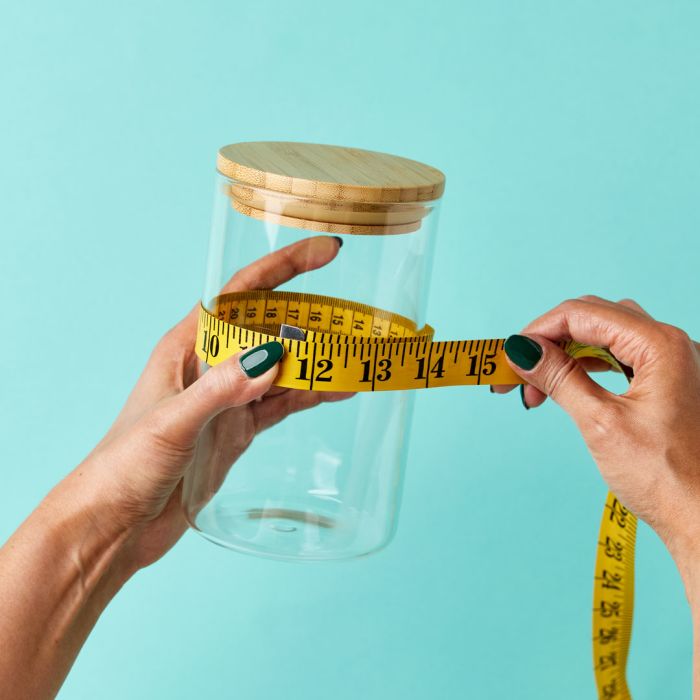
For cylindrical containers, wrap the tape measure around the container to see how much space you actually have before the label runs into curves or edges. Even if a label technically fits all the way around, I’ve found it usually looks better when you leave a little breathing room instead of pushing the design into the curved edges.
The goal is to choose a label size that fits comfortably within that flat space. When the label stays within the smooth area of the container, it’s easier to apply and the finished product tends to look more polished.
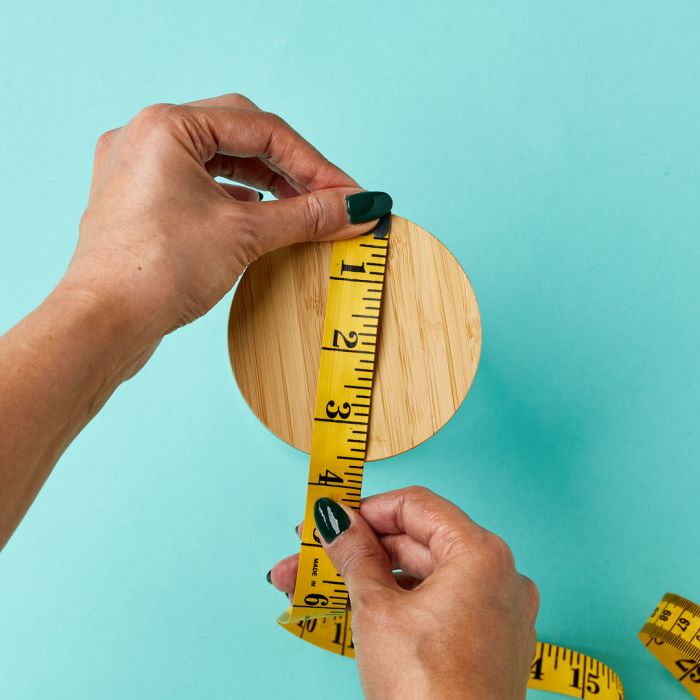
Once you know your measurements, you can compare them with common label sizes to find a good starting point. If you want more detailed measuring help, including a printable ruler, label shape templates, and a simple wrap-and-cut method, this guide walks through a few easy ways to measure your label space.
Example: How choose the right label sizes for jars and lids
To help you get started, here are some common label sizes used for popular jar types. These are general guidelines that can help you visualize how different label sizes may fit various containers.
Jar lid size chart
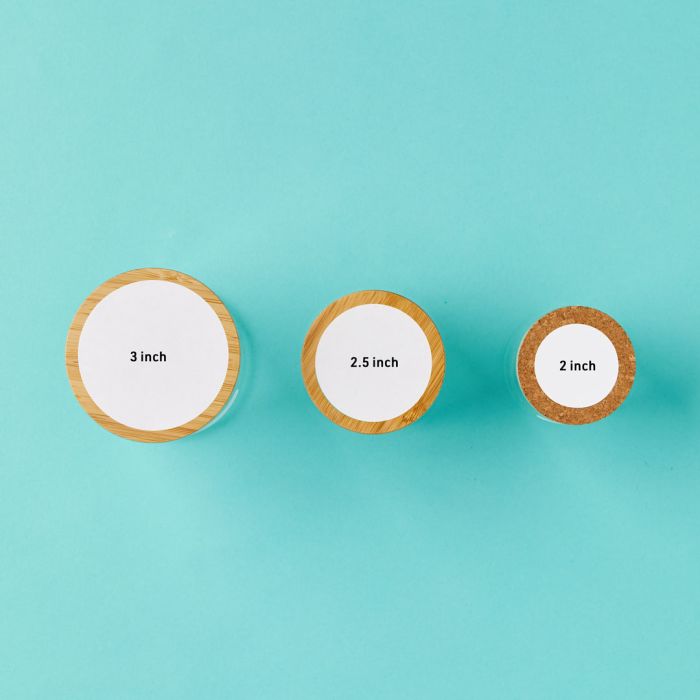
| Lid Diameter | Best Label |
| 3.85″ | 3″ round |
| 3.35″ | 2.5″ round |
| 2.56″ | 2″ round |
Round jar label size chart
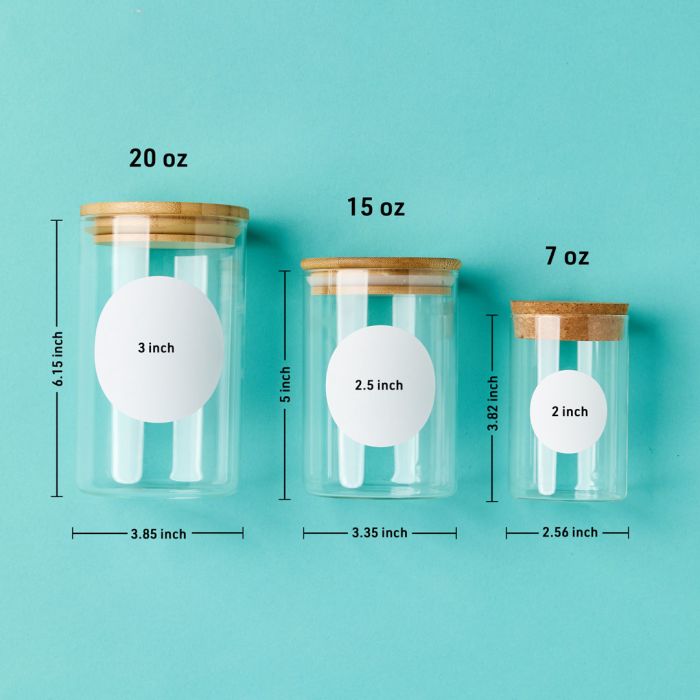
| Jar Size | Best Label |
| 20 oz jar | 3″ round |
| 15 oz jar | 2.5″ round |
| 7 oz jar | 2″ round |
Square jar label size chart
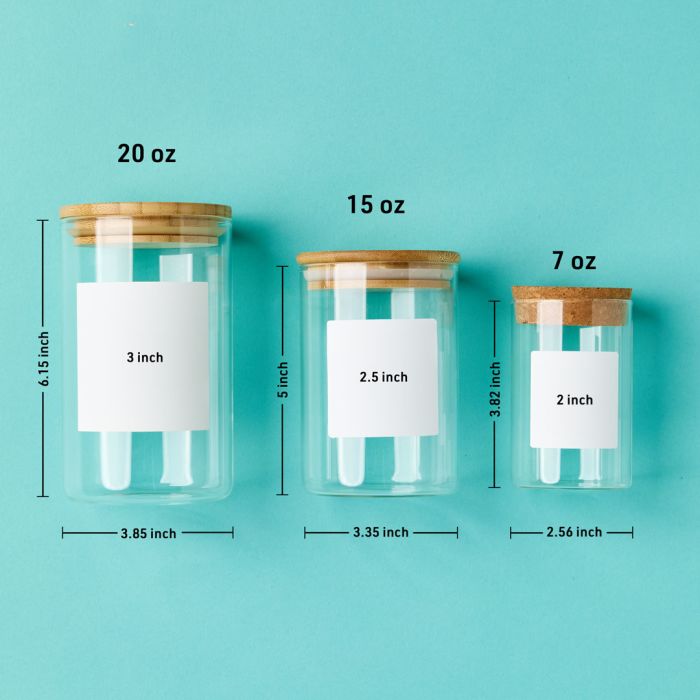
| Jar Size | Best Label |
| 20 oz jar | 3″ square |
| 15 oz jar | 2.5″ square |
| 7 oz jar | 2″ square |
Experiment with label shapes and combinations
When you’re choosing a label size, it’s also worth thinking about the shape and layout of your labels. Even when two labels share the same dimensions, the shape you choose can completely change how your packaging looks.
For example, round labels can soften the look of jars and bottles, while square or rectangular labels often feel more structured and modern. Looking at similar products can help you decide whether you want your label to blend in with the category or stand out with a different shape.
In some cases, using more than one label can also improve your packaging design. A main label on the front of the container can highlight your brand and product name, while a smaller label on the back or lid can hold ingredients, instructions, or additional details.
Combining different label sizes and placements can make your packaging more flexible while keeping your design clean and readable.
Choosing the right label size
Choosing the right label size affects both the look of your packaging and how clearly your product communicates important information. By thinking about your label’s purpose, evaluating the shape of your container, and measuring the available label space, you can create labels that enhance product visibility and support your overall design.
Once you know the label size that works best for your container, you can experiment with different label shapes and materials to create the look that fits your product best.
Find the right label for your product
Once you’ve chosen the label size that fits your container, the next step is selecting the right label format for your project.
Avery offers several ways to create your labels depending on how you prefer to work:
Custom printed labels if you want professional labels printed and delivered ready to apply.
Printable blank labels if you prefer to design and print your labels yourself.
Labels in a wide range of shapes and materials to match your packaging and branding style.
You can browse Avery labels by shape to find options that match the label size and design you have in mind. Whether you’re labeling jars, bottles, candles, or other containers, the right label size and shape can help your product look polished and professional.
